A Month of French Authors/ Un Mois d’Auteurs Français

Today marks the beginning of a month-long challenge that will introduce you to French contemporary authors, male and female, two per day (That’s the goal, at least:)

This challenge would have been impossible without the help of my French blogger/friend who writes under the name La Livrophage about all things literary. She has provided me with countless names and extracts from novels I haven’t always read. Her support has been unconditional. If you read French, stop by her blog. The only issue you’ll encounter is that your to-read list will grow and grow…

Her contribution has slightly modified my initial goal. In the end, I’ve decided to offer a French and  English version for every single post. So whether you read French or not, my hope is that you’ll discover a little bit of the vibrant French literary scene every day in April.

This link will help you find the French authors who are translated in English.


So here are Olivier Adam and Ingrid Astier for the letter A!

Olivier ADAM est né à Draveil, dans l’Essone, le 12/07/1974.

Il suit des études de gestion d’entreprises culturelles puis commence à écrire; il participe en 1999 à la création du festival littéraire “Les correspondances de Manosque.”

En 2000, Olivier Adam publie aux éditions du Dilettante son premier roman, “Je vais bien, ne t’en fais pas.”

Il signe ensuite avec les éditions de l’Olivier où il publie “A l’Ouest “(2001), “Poids léger” (2002), “Passer l’hiver” (recueil de nouvelles, Prix Goncourt de la Nouvelle 2004 et Prix des Éditeurs 2004), “Falaises” (2005, sélectionné dans 13 prix littéraires sans obtenir aucune récompense) et “À l’abri de rien” (2007, (prix Roman France Télévisions, prix Jean-Amila-Meckert et Prix Populiste et favori du Prix Goncourt 2007). Entre-temps, en 2003, il devient directeur de collection aux éditions du Rouergue.

Parallèlement, Olivier Adam écrit aussi plusieurs ouvrages pour la jeunesse, publiés pour la plupart à l’École des Loisirs: “On ira voir la mer” (2002), “La Messe Anniversaire” (2003), “Sous la pluie” (2004), “Douanes” (2004, éditions Page à page) “Comme les doigts de la main” (2005) et “Le jour où j’ai cassé le château de Chambord” (2005). Il publie par ailleurs régulièrement des textes courts dans les revues littéraires et anime des ateliers d’écriture en milieu scolaire.

Des histoires plein la tête, Olivier Adam sort coup sur coup “Des vents contraires” (Prix RTL-Lire 2009) et “Le cœur régulier” (2010), tout en écrivant des ouvrages jeunesse, “Les Boulzoreilles,” avec Euriel Dumait (2010) ou “Personne ne bouge” (2011).

“Les lisières” est sorti à la rentrée littéraire 2012, un roman où le destin d’un homme croise celui de la France.

En 2015, “Peine perdue,” qui se penche sur vingt-deux personnages d’une station balnéaire de la Côte d’Azur, est finaliste du Prix des libraires.

Pour le cinéma, outre la co-scénarisation de ses romans (“Je vais bien ne t’en fais pas” adapté en 2006 par Philippe Lioret, “Poids léger” adapté en 2004 par Jean-Pierre Améris et “Sous la pluie” en cours d’adaption par Patrick Goyette), Olivier Adam a co-signé les scénarios de “L’été indien” d’Alain Raoust (2007) et de “Maman est folle” de Jean-Pierre Améris (2007, téléfilm), de “Welcome” et “Des vents contraires” de Jalil Lespert.

En 2016, “La Renverse” se penche sur le sort des proches d’un homme politique éclaboussé par un scandale sexuel.

Un extrait du roman “Le Coeur Régulier:”

“Vu de près, pris dans le cours ordinaire, on ne voit rien de sa propre vie. Pour s’en saisir, il faut s’en extraire, effectuer un léger pas de côté. La plupart des gens ne le font jamais et ils n’ont pas tort. Personne n’a envie d’entrevoir l’avancée des glaces.”

Un extrait du roman “Falaises:”

“Je sais le poids des morts. Et je sais le mauvais sort. Je sais la perte et le saccage, le goût du sang, les années perdues et celles qui coulent entre les doigts. Je connais la profondeur des sables, j’en ai éprouvé la résistance, la matière meuble, équivoque. Je sais que rien n’est fiable, que tout se défait, se fissure et se brise, que tout fane et que tout meurt. La vie abîme les vivants et personne, jamais, ne recolle les morceaux, ni ne les ramasse.”

No, it’s not from France but from a recent trip I took to Baltimore. My French eye couldn’t miss the small table and chair, such a familiar sight in France . 

Olivier Adam was born in Draveil, in the Parisian suburbs, on July 12, 1974.

After the university he starts to write and participates in 1999 to the creation of the literary festival “Les correspondances de Manosque.”

In 2000, Olivier Adam publishes his first novel, “Je vais bien, ne t’en fais pas,” which becomes an immediate success. Adam becomes a prolific author who writes for adults and children alike. His work has been very well received and praised in France. Adam is also a movie scenarist who has adapted some of his own novels for the cinema and also collaborated to the writing of other French films.

Through his novels Adam depicts ordinary men and women, often blue collar, middle class individuals, going through deep identity crisis. Adam is particularly interested to write about the shifts from one social class to another, not unlike sociologists would do.

It is impossible to translate a work of fiction if you aren’t a professional translator. So I won’t translate the extracts from Adam’s novels “Le Coeur Régulier” and “Falaises.”

Unfortunately, Adam’s work is not available in the US. But I found a review written in English related to the novel “Je Vais Bien, Ne T’en Fais Pas,” the book that took Olivier Adam to the French literary scene. The author has in fact adapted the story to the movies and it is available in the US. You can read the book review on Book Around the Corner and read about the movie on Wikipedia (my family always contributes to the funding of the free encyclopedia).

Ingrid ASTIER est née à Clermont-Ferrand le 02/04/1976.

Normalienne, agrégée de Lettres, et toquée de cuisine, Astier mène une carrière impressionnante : Prix Strasbourg 1993 pour un mémoire rédigé en allemand intitulé “Rencontre avec Brecht et sa modernité,” agrégée de littérature moderne et professeur de littérature à Paris VII, elle publie en 1999 une nouvelle, Face à faces, au Mercure de France, et obtient le prix du jeune écrivain.

En 2005, elle est embauchée comme cuisinière sur le tournage du film de Damien Audoul.

Elle cultive son penchant pour la littérature et la cuisine et pratique la gourmandise – verbale – en publiant les Exercices négatifs de Cioran chez Gallimard (2005). Elle est aussi l’auteur du Goût du chocolat et du Goût du thé, au Mercure de France (2007) et de nombreux articles, notamment dans le Dictionnaire culturel de la langue française d’Alain Rey.

Après le chocolat, le thé et la rose, elle publie en 2009 un ouvrage consacré au goût des parfums, quatrième volume de la série Le goût de… Elle écrit également sur le safran, le chocolat et la vanille, sans oublier l’excellent Cuisine Inspirée (Agnès Vienot, 2007), dans lequel, mêlant portraits de chefs et d’artistes, elle évoque saveurs et souvenirs, et réussit l’anti-livre de cuisine parfait!

Avec “Quai des enfers”, publié en janvier 2010 dans la collection Série Noire de Gallimard, Ingrid Astier fait son entrée dans l’univers du polar. Ce premier “policier,” sélectionné pour le Prix du Roman Noir 2010 (BibliObs-Le Nouvel Observateur, Prix Sylvie-Turillon 2011, Prix Lafayette 2010, Prix Paul-Féval de la Sociéte des Gens de Lettres 2010, Prix Polar en Plein Coeur 2010) nous plonge dans les ventres obscurs de la Seine, théâtre de sombres meurtres.

Deux extraits du roman “Quai des enfers:”

“La première fois que Rémi avait aperçu l’Institut médico-légal, c’était, comme tout le monde, depuis le train fantôme du métro. Les wagons chahutaient sur le viaduc hélicoïdal, en mugissant. Fait étrange, la station de métro enlaçait les murs austères, entamant autour des fenêtres à barreaux une ronde reptilienne.”

“Tous les ingrédients étaient là : la seine des bateaux-mouches rendue infréquentable, un type célèbre hésitant entre macabre et génie, des jalousies de femmes, un arrière-décor entre sexe drogue et rock star, un nain diabolique sorti de sa boîte avec la langue tirée, des morts signées par un artiste… ”

Vous pouvez lire ici un entretien avec Ingrid Astier, pour son nouveau roman policier : “Haute voltige.”

Since flavors and scents take first stage in Ingrid Astier’s writing, this is a pic from a lovely café in Baltimore where I ordered and enjoyed an unusual delicate white rose tea for breakfast.

Ingrid Astier was born in Clermont-Ferrand in Auvergne on March 2, 1976.

In addition to an impressive academic background she is also crazy about cooking. She will be in fact hired as a chef during the filming of a French movie. Astier cultivates her passion for literature and cooking and publishes several books related to the savors and flavors of chocolate, tea, saffron, and vanilla among others. Her cookbook “Cuisine Inspirée” blends chefs and artists’ portraits, flavors and memories. The book has been called the perfect anti-cookbook.

“Quai des Enfers,” published in 2010 by the highly respected house Gallimard in their famous collection Série Noire, is extremely well received in France. France nurtures a long and strong history with crime writing. We call this genre Polar in French, from the words police and policier (policeman).

“Quai des Enfers” marks a shift in Astier’s writing journey. With this novel that takes the readers through the underbelly of the River Seine, Astier enters this dark suspenseful universe that attracts so many French readers. Including my own husband. His Serie Noire collection took so much place in our home library that he has recently agreed to pack them in boxes and stored them in the garage, where I sometimes find him, looking for a favorite title. A tough decision, let me tell you, even for me who favors other genres.

You can read here an interview about Astier’s second “polar” called “Haute Voltige.”

 

Enjoy your weekend!

Bon weekend!

See you on Monday with letter B!

A lundi pour la lettre B!

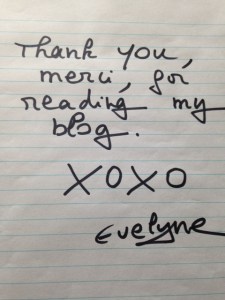
Thank you for reading!

Merci de nous lire!

Good luck if you participate to the A to Z Challenge!

Bonne chance si vous participez au Challenge de A à Z!

 

French Writers From A to Z

My Childhood Public Library Was Located in this Castle

In December 2016, WordPress asked writers, photographers, artists, poets, and business and website owners a simple question: what’s in store for you and your blog/website in 2017?

A few months later, I would offer the same response I did back then.

Through my blog, I open a window on my life spent between two languages and cultures (French and American English).

With this goal in mind I decided to participate once again to the A to Z Challenge.


Here is what you can expect to find every day but Sundays for the month of April:

A selection of French authors, a man and a woman, for each letter of the alphabet.

A couple of facts related to this challenge:

1- Here in the US, I don’t find too many French books translated in American English.

The most famous French writers remain Camus with The Stranger and Victor Hugo with Les Misérables. Some Francophiles know the contemporary work of a few authors, Michel Houellbecq, for example. However, the vast majority of Americans see France either as an old country or as a pink-chic land.

2- With the support of Livrophage extraordinaire, a French avid reader I’ve only met through our mutual blogs and our e-mail correspondence, I was convinced to build a list of contemporary French authors.

We decided that this challenge should focus on writers from the 20th century with books published in the 20th and 21st century.

In an interesting way, my French virtual friend devours American literature. Coming up with a list of  French authors from A to Z will be a challenge for her, too.

In a natural way, she decided to write in French while I will write in English. Our posts won’t be translated and won’t alternate regularly between the two languages. They will depend on our knowledge and interest for a specific author.

So…

My hope is that everyone of you will find something, in either language.

After all, this is the life I live every day.

It’s a way of life that carries its own challenges but offers countless surprises. And I love it just the way it is.

I hope you will enjoy this challenge and will stop by once in a while, maybe to refresh your French 🙂 and perhaps to discover a new French writer and fall in love with her/his words.


Meanwhile, for everyone dealing today with the spring nor’easter, a photo taken a few years ago along a snowy California trail, also in the spring.


Reflections and Notes Post A to Z Challenge

A2Z-BADGE 2016-smaller_zpslstazvib

This was my second participation to the A to Z Challenge.

Thoughts after I finished? The amount of time I spent gathering the material for each letter was more consuming than the previous year, mostly because in 2015 I had planned all of my posts ahead of time. This year, except for the second week that was ready to be published every morning around six because one of my daughters was home and I wanted to do fun things with her, I wrote most posts a couple of days prior to posting and even the night before.

As always, my daily reward was to see familiar names and faces stopping by, liking and leaving comments on my posts. It was also nice to see new names and faces popping in.

I would have liked to read more blogs during the month of April, but I found it hard to write and read at the same time. Also I would love to find a much easier way to meet the bloggers who share my interests instead of having to scroll down the endless list. Most blogs don’t have a name that hint at the content. Did you meet the same challenge?

I’m still undecided about my participation for next year. My goal for this challenge is to keep writing about the French and American English languages and cultures. A few themes have come to my mind and I need to think about them…

Meanwhile, as a closure for this 2016 A to Z Challenge, I will leave you with a few extra Little French and American Words I didn’t use.


French words used in the USA: bonbon, boutique, bureau, boutonnière, brunette, chef, double entendre, escargot, pièce de résistance.

English words used in France: break, flipper, light, parking, station service, sweet.


I let you guess their meaning, whether these words are used in France or in the USA. I promise to reply.

IMG_1919May 2016, in the Greenwich Village in New York City, a neighborhood where many years ago I set foot for the first time, totally lost in translation.

All These Little French and American Words…


Z


Welcome to the last day of the A to Z Challenge!

Today two words for the letter Z

*one English verb and noun with two common meanings in the USA and in France, but also additionnal meanings whether it’s used in the USA or in France.

As a bonus to celebrate the end of the challenge:

*one French interjection, a favorite of my mother who never swears, that triggered the title for a song and an album from a famous American musician.


ZAP

As a verb and a noun Zap has countless meanings in the USA.

The French say Zapper for Zap and use it also to describe channel-hopping and the act of cutting the commercials.

By extension they created the words Zappeur and Zappeuse for the people who channel-hop.

Zap is also used in France to depict people switching from one idea to another or the act of completely forgetting something.

For example:

‘J’ai complètement zappé cette histoire’ would be literally translated by ‘I totally zapped this story.


En tant que verbe et nom, Zap a énormément de définitions aux USA. Tout comme en France, le verbe est utilisé pour sauter d’une chaine de télé à une autre et pour couper les pubs.

Mais zap est aussi utilisé dans d’autres contextes.

Quelques exemples :

1- quand une vague de froid tardive zap les fleurs printanières.

2- quand on zap un plat au micro ondes.

3- quand dans un film les aliens zap les occupants d’un vaisseau spatial.

4- pour imiter le son zap d’une arme à laser.

5- quand une douleur zap une partie du corps (douleur fulgurante).

6- quand dans un film un personnage zap du présent au futur par l’intermediaire d’une machine fictive.

7- quand une mauvaise note zap la chance d’un élève de réussir son examen (tuer la chance).

Par contre zap n’est pas utilisé avec la notion de passer d’une idée à l’autre ni avec celle d’oublier une histoire.


Embed from Getty Images


ZUT ALORS

Zoot Allures by Frank Zappa is a pun on the popular French interjection Zut Alors, an interjection that my maman uses whenever she feels the urge to say a bad word but doesn’t want to. Zut can also be used.

Zut Alors or Zut is to the French what Shoot is to the Americans.

Embed from Getty Images


This concludes the A to Z Challenge that I, among hundreds, started on April 1.

Thank you so much, everyone, for your support as I traveled along the bumpy road of our alphabet.

A particular thank you to the readers who have added words for some specific letters and even suggested some that I’ve been gladly using.

Merci pour votre support, vos suggestions, vos commentaires, et vos ‘like.’

Have a great weekend. See you later, here or on your blog.

Bon weekend à toutes et à tous et à plus tard, ici ou sur vos blogs.

photo(7)


All These Little French and American Words…

 Y

Welcome to the A to Z Challenge!

And I thought X would be my challenge…

Two expressions and not a word for the letter Y

*One is used in the USA and the other one in France. None has an equivalent when literally translated.


YOUR CALL

This popular expression in the USA has no direct translation in French. The closest meaning is ‘c’est ton/votre choix, c’est ta/votre decision.’

Depending on the context, ‘comme tu veux’ or ‘comme vous voulez’ is a possibility.

Your call ou It’s your call est une expression très fréquente aux USA. Elle s’utilise dans une discussion personnelle ou professionnelle quand une décision est laissée au choix de son interlocuteur.

Par exemple:

A- Est-ce que tu préfères manger mexicain ou japonais ce soir?

B- J’aime les deux. It’s your call. (Comme tu veux. C’est ta décision.)


photo(5)

My fiancé found this vintage British phone in London in the late 1980s.

Should I buy it, he asked me.

Your call, I said.

It was mine to move it with us to the USA.


Y ALLER MOLLO

The French expression Y aller mollo implies taking it slow, doing something without rush or exaggeration.

For example:

Vas-y mollo avec ma voiture quand tu l’empruntes samedi soir.

Take it easy with my car when you borrow it Saturday night.


Y aller mollo can also be used with the negation: Ne pas y aller mollo.

For example:

Tu n’y es pas allé mollo quand tu as dit à ton collègue qu’il était un bon à rien.

You went overboard when you told your colleague that he was a good-for-nothing.


Do you know of a French or English word starting with the letter Y that has a different meaning whether it’s used in France or the USA?

Connaissez-vous un mot français ou anglais commençant par la lettre Y qui a un sens différent selon qu’il soit utilisé en France ou aux Etats Unis?

Promise I’m back tomorrow with not only One word but Two starting with the letter Z!

All These Little French and American Words…

X

Welcome to the A to Z Challenge!


Finding these little French and American words has not exactly been a piece of cake or pas du gâteau in French.

I knew from the beginning that when letter X and I would cross paths I would meet the heck of a challenge.

So for today’s letter X, instead of posting about an identical English or French word that carries a different meaning whether it’s used in the USA or in France, I’ll give you one term that conveys the exact same meaning in both countries.

Used in France and in the USA, my two favorite homes on earth, this term is also used in other countries around the world, proof that some words have the power to unite us.


XOXO


XOXO is a casual term used at the end of a letter, email, or text to express hugs and kisses to friends or family members. Probably good to avoid in business.

There is controversy as to which letter (‘O’ or ‘X‘) represents which action (‘hug’ or ‘kiss’).

Do we really care if X or O represents the arms or the mouth as long as we send each other hugs and kisses?

In addition XOXO is also an American brand of clothes and accessories for young women and children.

And XOXO is also short for eXtensible Open XHTML Outlines. Not as cute and sweet as hugs and kisses, but very useful, though. Ask any high tech person in your life for more details…


photo(4)


Do you know of a French or English word starting with the letter X that has a different meaning whether it’s used in France or the USA?

Connaissez-vous un mot français ou anglais commençant par la lettre X qui a un sens différent selon qu’il soit utilisé en France ou aux Etats Unis?


See you tomorrow with the letter Y


All These Little French and American Words…

 W


Welcome to the A to Z Challenge!

One word for the letter W

*One English word with a different meaning whether it’s used in the USA or France.


WARNINGS

The English word ‘warnings’ is used (always in the plural form) by French drivers to say ‘hazard lights.’

The real French noun to designate the set of hazard lights on a car is ‘feux de détresse,’ literally ‘fires in case of distress.’ ‘Feux’ would mean ‘lights’ in this context.


Aux USA les warnings français s’appellent, ‘hazard lights.’ Leurs règles d’utilisation varient d’état en état. Je me souviens de l’appelation ‘feux de détresse’ en France.  Est-ce toujours utilisé? Davantage ou moins que ‘warnings?’

Un warning étant un avertissement en anglais, je trouve le choix français assez approprié.


photo(2)

From my car to yours.


Do you know of a French or English word starting with the letter W that has a different meaning whether it’s used in France or the USA?

Connaissez-vous un mot français ou anglais commençant par la lettre W qui a un sens différent selon qu’il soit utilisé en France ou aux Etats Unis?


See you tomorrow with the letter X

All These Little French and American Words…

V

Welcome to the A to Z Challenge!

One word for the letter V

*one French word with a slight different meaning whether it’s used in France or in the USA


VOILÀ

The French word voilà literally means « See there » or « There it is. »

For example, a French mother could tell her child, “Voilà ton sac avec tes affaires de gym,” or “There is your bag with your sport gear.”

There is no meaning of triumphant revelation when the French say, « Voilà. »

In fact, I think there is sometimes a nuance of disappointment when I say, « Et voilà. »

For example, if I’m inattentive and miss my exit on the highway, I could say, “et voilà,” to acknowledge my mistake and imply that that I’m responsible since I was not paying attention.


Aux Etats Unis voilà traduit la notion de révélation généralement avec une note triomphante. Voilà est utilisé pour attirer l’attention ou pour suggérer quelque chose qui apparaitrait comme par magie.

Le mot peut être par exemple utilisé dans des shows de cuisine quand la liste des ingrédients nécessaires à la réalisation d’un plat est énumérée jusqu’à l’annonce du plat.

Boudoirs, mascarpone, café, marsala, and voilà un tiramisu!


HPIM3496

 A long hike, starting at midnight, under the full moon, arrival betwen five and six a.m. at the top of Half Dome in Yosemite, and voilà the view, right before sunrise. 

For a better view, click on the photo.


Do you know of a French or English word starting with the letter V that has a different meaning whether it’s used in France or the USA?

Connaissez-vous un mot français ou anglais commençant par la lettre V qui a un sens différent selon qu’il soit utilisé en France ou aux Etats Unis?

See you tomorrow with the letter W


All These Little French and American Words…


U

Welcome to the last week of the A to Z Challenge!

This last stretch toward the letter Z is more challenging and I hope you’ll bear with me.

One word for the letter U

* One English verb and noun with similar meanings in France and in the USA and a couple of exceptions.


UPGRADE

Since the phenomenal explosion in the high tech industry happened in the USA, it is sometimes difficult, even awkward, to translate the vocabulary related to computers, the Internet, and more recently social media in other languages.

French is no exception.

Since the early -00’s, countless American English words, phrases and expressions, originally related to the high tech business started to be used on a daily basis in France. Dictionaries have been updated to show these changes.

Upgrade is one of these words.


Typically, the ending –ER is added to an English verb, giving it a more French appearance.

In this manner, the verb ‘to upgrade’ is ‘upgrader’ in French.

The meanings of the verb are the same in French and in English: improve, increase, or modernize.

However, upgrade is also used in France to describe someone’s promotion.

For examples:

“I’ve been upgraded to manager.”

“On her flight to Dallas, she has been upgraded to business class.”

“The hotel upgraded us to a suite.”

Recently, I was reading a story written in English and set in a contemporary American urban area. One of the characters was complimenting his buddy on his new girlfriend and said, “I see you’ve received a girlfriend update.”

In this specific situation, I undestood that ‘upgrade’ was used to describe an improvement related to a person, made in comparison to a previous person and to mock that person.

Upgrade as a noun has the same meanings of improvement and modernization in the USA and France. However, it isn’t used in France to describe an upward grade or uphill slope.

So, my American friends, how do you use ‘upgrade?”


HPIM4725

My son and I on a steep upgrade section of the trail leading to the top of Clouds Rest, in Yosemite National Park.

Aux Etats Unis comme en France, ‘upgrade’ utilisé en tant que verbe signifie améliorer, augmenter, moderniser…

En tant que nom, ‘upgrade’ aux Etats Unis décrit une pente ou piste ascendante et traduit tout comme en France le sens d’amélioration, d’augmentation, de modernisation, particulièrement dans le milieu high tech et business en général.

Par contre l’utilisation de ‘upgrade’ pour décrire la promotion de quelqu’un est incorrecte en anglais. Aux USA on upgrade une chambre d’hôtel, une place sur un vol (avion), mais pas une personne.

Utiliser ‘upgrade’ pour une personne est alors péjoratif puisqu’il y a une référence à la personne précédente.

Par exemple : Je vois que tu as reçu une upgrade côté petite amie.

Sous-entendu, celle d’avant n’était pas terrible, ou en tous cas, celle ci est mieux.

Alors, mes amies et amis français, dites-moi, utilisez-vous le verbe et le nom upgrade dans d’autres contextes?


Do you know of a French or English word starting with the letter U that has a different meaning whether it’s used in France or the USA?

Connaissez-vous un mot français ou anglais commençant par la lettre U qui a un sens différent selon qu’il soit utilisé en France ou aux Etats Unis?


See you tomorrow with the letter V

All These Little French and American Words…

T

Welcome to the A to Z Challenge!

Three words for the letter T

*all three of them are spelled like English words, sound like English words but aren’t exactly English words.

*all three of them have just a little French touch.


(A PAIR OF) TENNIS

A pair of tennis shoes is called tennis or a pair of tennis in French.

For example I would say in French: Je mets mes tennis. And not: I put my tennis shoes on.

The game is called tennis as well. And American sneakers are called baskets in France.

Les américains spécifient tennis shoes pour des tennis our une paire de tennis. Les baskets françaises sont des sneakers aux USA.


TENNISMAN OR TENNISWOMAN 

A tennis player is called a tennisman or a tenniswoman in French.

Aux Etats Unis un tennisman ou une tenniswoman s’appelle un tennis player.


Embed from Getty Images


TALKIE-WALKIE

A Walkie-Talkie is called Talkie-Walkie in France.

Talkie-walkie pour walkie-talkie. Une simple petite inversion dans l’ordre des mots.


Embed from Getty Images


Do you know of a French or English word starting with the letter T that has a different meaning whether it’s used in France or the USA?

Connaissez-vous un mot français ou anglais commençant par la lettre T qui a un sens différent selon qu’il soit utilisé en France ou aux Etats Unis?


See you on Monday with the letter U

Meanwhile, I wish you all a great weekend.

A lundi pour la lettre U

En attendant, je vous souhaite à tous un super weekend.