French Friday: Coming Soon To Your Inbox

When I lived in France, I had never considered that one day I would be speaking alternatively in English and French every day of my life, for the rest of my life.

Who would have known that this lifestyle would distance me from my homeland, but also reignite a deeper  connection with some of the most interesting aspects of my mother tongue?

I deliberately use “mother tongue” because it’s through my mother’s way of speaking that I noticed the richly evocative vocabulary that most people in Normandy used. Expressions that triggered visuals infused my mother’s conversations.

When I was about five and heard for example that it was not good de “Casser du sucre sur le dos de quelqu’un,” I literally saw someone breaking lumps of sugar on someone’s back. In American English the best equivalent would be bad-mouthing someone. There is a French equivalent for bad-mouth. But who would insist that it is better than breaking sugar on the back of someone? If my mother spoke about someone who had a tough skin this person was a dur à cuire or hard to cook.


It’s only when I moved to California that I started to compile these savourous expressions that have provided me more than just words but sensory feelings.

As much as I love the English language that I find often more effective than French, I adore these French expressions.

Since all languages evolve, some of these French expressions age, fade and even vanish. Others appear. And sometimes, an old one is trendy again.
So without further ado, here is my theme for the 2018 A to Z Challenge:

From A to Z, Twenty-Six Funny, Weird, Vivid French Expressions


From April 1st to the 30th and following the alphabet, participants to the challenge post every day but Sundays. I’ll do the same, and I hope these posts will make you smile, laugh, or maybe think that these French people are even stranger than you thought.

Since I keep finding new expressions, I should be able to pursue this challenge for another two years 🙂

Check your Inbox in April! See you there!


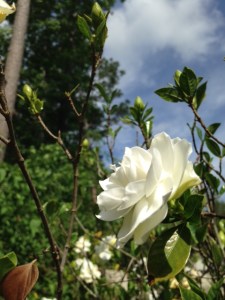
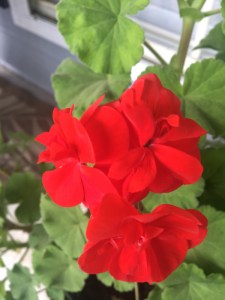
P.S. The flowers are from my backyard. If you and your home are still in winter mode and miss the spring, I hope they will bring a little bit of color to your own yard.




French Friday: For Humankind

With the Republican running candidate blasting his opinions about women during his campaign and the #Metoo movement that followed, women have clearly taken the public debate stage.

Whether we appreciate the courage of the women who come forward or fear excesses in the process, it is impossible to ignore the momentum and to deny the need for real equality between genders.

Since it is a very heated debate it’s important, I think, to keep our sense of humor and critical sense as we plow our way along the arduous road.

Just this week, a few events show how the best intentions can fall flat and also how even women can see things very differently.

Pretty much everyone likes Justin Trudeau, the Prime Minister of Canada. And pretty much everyone noticed him when he corrected a woman who said “manhood” and offered “peoplekind” instead.

Humankind or even humanity would have worked just fine. Despite the fact that Trudeau interrupted a woman while she was speaking, his intentions were no doubt sincere. Inclusion is necessary, but sometimes the desire to achieve it can lead to faux-pas.

Canada is still making genuine efforts. Take this magazine that printed two versions of its latest issue. One is sold 26 cents more than the other to reflect the disparity of salaries between men and women.

In the U.S., Macy’s is soon to introduce a collection of modest clothing and hijabs to capture a slice of the Muslim women’s clothing market.

At the same time in Iran, women are taking their veils off, putting their lives in danger, to obtain the right to choose whatever clothes they wish to wear.

Who is right? Maybe there is no right and wrong when it comes to women’s freedom to be who they want to be.

In any case, women are playing centerstage in these early months of 2018.

Now that I chose to write a month of French expressions for the A to Z Challenge in April, I could only notice that some of the most common French idioms are in fact sexist.

I was tempted to list them but have decided otherwise. I didn’t want to put de l’huile sur le feu, as we say in French (oil on the flame), but instead focus on the delightful aspect of these small words and short expressions. Thanks to my early personal mistakes, I quickly learned that all tell a lot about a country and its culture. Many are not perfectly exchangeable from one language to another. Often, they still have an equivalent. Sometimes, nothing can exactly convey the idea.

To my own surprise, I quickly compiled a first draft of my 2018 list, only missing as always an expression for the letter X.

As I went through the list I noticed that several expressions had something to do with food.

Now, it was telling something about France that men and women alike would agree on.


And nothing and nobody can be better than animals to bring smiles to humankind.


These photos have been taken in my native Normandy, where a few inches of snow fell over the last few days, transforming the landscape in a scenery that I rarely got to enjoy when I lived there as a child.


French Friday: Reading to Understand Mental Illness

Although I skipped my yearly participation to the Multicultural Children’s Book Day I still support this national event, which will be celebrated on Saturday, January 27. Multicultural Children’s Book Day highlights the need for diverse books. More and more editors and publishers are aware that children become readers when they see themselves in the stories they read and develop more empathy when they discover how other children live.

Most often, books suggested and reviewed on Multicultural Children’s Book Day represent minorities’ cultures and faiths.

And those books are as important as ever.

But I decided to come up with my very short personal selection of books that also represent a form of difference. The idea grew from an exceptional novel that treats of mental illness. I read Turtless All the Way Down a few weeks ago but the story still sits on my mind.

The following books portray children and teenagers who deal with mental disorders, some less severe than others. These children or teenagers’ lives are ‘different,’ much more challenging than ‘normal’ lives but not less fulfilling. In fact, in all these books these kids and teens are very inspiring.

Compassion for them is one thing.

Understanding or trying to understand what they go through is another.

Reading about them is a crucial step.


For Teenagers:

I don’t need to introduce the author behind the debut novel Looking for Alaska and the sensational best seller The Fault in Our Stars.

John Green is not only an exceptional writer he has also been candid with the fact that he has Obsessive Compulsive Disorder (OCD). In Turtles All the Way Down he depicts sixteen-year-old Aza’s own struggle with such accuracy and integrity it will break your heart and still make you smile and definitely root for her.

This is pure John Green, so expect amazingness. The dialogues are especially great, witty and right 0n. I love Aza’s best friend so much. And I could only relate to her mother’s genuine will to make her little girl feel better. The novel is vividly set in Indianapolis. Written for Joey 🙂

If you haven’t read this novel, grab one copy or/and recommend it to a teenager near you.


For Elementary Students:

Spaghetti Is Not a Fingerfood (and other life lessons) written by Jodi Carmichael and illustrated by Sara Ponce

This chapter book ( 7 to 10 years old) is told from the point of view of eight-year-old Connor who has Asperger Syndrome. It’s a sweet, funny, and tender book with also great illustrations. An easy read that treats of a complex topic. Perfect for children who live or go to school or play with boys or girls with Asperger Syndrome.

Joey Pigza Series by Jack Gantos (5 books)

Joey is taking ‘dub meds’, the nickname he gives to Ritalin. Joey is plenty aware of his wild mood swings, but he can’t help it if he moves, jumps, and sometimes gets in trouble. Hyperactivity and its related disorders are very common in children, and it’s such a gift for kids who are affected and their friends alike to get to meet irresistible Joey.

Adults disagree on the age range for the series, due to the seriousness of other issues presented in the books. I would say that some fourth graders are already able to handle them while some eight graders will still enjoy them.


For Middle Graders:

Counting by 7s by Holly Goldberg Sloane

A pure chef d’oeuvre, that you may already know since the novel has been extremely well received upon its publication. And for good reasons.

Willow is twelve and is reassured when she counts by 7s. She loves nature and her parents. When they die brutally her world changes overnight. It could be a heartbreaking story and it is very moving, but it is above everything a story of resilience and courage from a girl who had already a lot on her plate to start with.


Picture Books:

Wilma Jean the Worry Machine written by Julia Cook and illustrated by Anita Duffala

This sweet and funny story introduces anxiety disorders in children through adorable Wilma Jean. Frequently undiagnosed, anxiety disorders are, however, very common in children.

I was one of these super anxious kids, and I know how painful it is to worry alone. I’m lucky since I got much better when I started college. But the title of this PB echoes my childhood experience.


Antsy Ansel written by Cindy Jenson-Elliot and illustrated by Christy Hale

Who doesn’t know the great photographer behind the stunning photographies of Yosemite National Park? It is less known, though, that Ansel Adams could not stand still. He fidgeted and was constantly on the move. School was not his thing. But when his father introduced him to the natural beauty of the Sierra and particularly of Yosemite young Ansel found calmness and focus. The rest is history.

A great, great story to reassure the child who cannot be still. A successful, creative life is still possible.


And last but not least, two classics, absolute must-read novels that (in my opinion) opened the gates to the more recent wave of books that treat of mental disorders:

Rules by Cynthia Lord

Autism introduced through a twelve-year-old girl put in charge of her younger autistic brother. Poignant and authentic, the Newberry Honor novel was published in 2006.

Mockinbird by Kathryn Erskine

A young girl who has Asperger is dealing with the loss of her brother brutally killed during a school shooting. Sadly still timely and I’m afraid to say maybe timeless. Exceptionally well crafted, emotionally packed, and very hopeful too the National Book Award For Young People’s Literature novel was published in 2010.


On a totally different note, I want you to know that I just decided to embark the crazy A to Z Challenge train again this year. For anyone who doesn’t know what the challenge is about: One daily post for the entire month of April, except on Sundays, following the order of the alphabet.

Based on readers’ feedback, WordPress statistics, and my personal interest I will return to my beloved French idioms. My hope this year is to mix and match classics and most recent.

Until then, I leave you with two expressions. The first one was very familiar when I lived in France and is still current, while the second was born many years after I left France.

I hope you will find their meaning and leave a comment below!


SE DORER LA PILULE

C’EST UN TRUC DE OUF!


Enjoy your weekend.

See you here next Friday and on your blog in between!


French Friday: a Cultural Dive Through French TV Series


This post was a tough call for me. I always have at least a couple of drafts ahead of my postings. Usually I write them at night, a few days before hitting the Publish button.

Last month during the A to Z Challenge, I introduced several contemporary French authors who write crime fiction and thrillers. As a reader it has never been my favorite genre, but I like a good TV crime drama. My partner from the other side of the Atlantic sent me links to some movies extracts, based on these crime fiction novels. Which conjured the idea of a new post that I drafted then and completed early this week.

Yesterday night I was home late and alone since my husband was away, so I tackled last week thick Sunday edition of the New York Times. In the Style Magazine I found an article about foreign TV series. Which immediately caught my eye since the article and my blog post approach a similar topic. The author of the article writes about foreign series at large and not specifically about French ones. However, she mentions my current favorite French crime fiction show.

I was first hesitant but ultimately decided to go ahead and publish my French Friday post in the version I finished on Monday.

My parents didn’t own a TV set until I was in high school, so I didn’t get to watch much TV when I grew up. My paternal grandparents had one, though. This is at their home that I could catch up with Le Commissaire Moulin, a nice-looking good cop that I followed with fervor while he and his team solved crimes. Most crime fiction TV series in the 1980s were American. We had Starsky and Hutch and also Miami Vice, but I was never hooked as much as when I tagged along Columbo. Still inimitable.

While we had never watched TV much in Paris, my husband decided to buy a TV set as soon as we moved to California. Like me, he had big hopes that normal things would transform us into Americans and that watching TV would make us fluent. Another topic for another day.

At night my husband followed a few favorites shows. Among them, the series Cops. He has told me numerous times that he would have loved to be a police detective. And I have told him numerous times that we would never have met. So while I didn’t enjoy watching graphic videos showing cops in action during patrols, I still remember the catchy theme song.

“Bad boys, bad boys, watcha gonna do?”

That’s when I wondered why I had been taught to say, “What are you going to do?”

In a funny way, the baby I expected then is quite fond of the expression “Gotcha.”

Most Wanted was also a show my husband watched. Thanks but no thanks. The mugshots pinned at the post office already gave me the goosebumps.

But I liked NYPD Blue. As I watched the team of detectives from the 15th Precinct I got more than a glimpse of the streets of New York City. I discovered the American justice system, with its similarities but also differences with the French system.

There were also the occasional slang words that I would add to my growing list of new words. The F word was new to me, and I can now attest that it wasn’t yet all the rage. It felt reserved to special occasions.

Above all, there were the personal stories entwined with the police’s daily work. Facebook would say, “It was complicated.”

Through them I discovered, even if the situations were dramatized, the way American people communicated and lived together. Everything felt both progressive and backwards. Women had more prominent careers and there was less blatant sexism than in France. But hairspray was more widely used and people didn’t dress that well. Coffee was left on the burner all day long and food was an afterthought.

This is why I think that foreign TV series can be real windows on other cultures.

Until recently it was hard to watch French movies and even more TV series in the States. It still remains a challenge since France is a watchdog when it comes to exporting its culture. But when a series is noticed and gets the industry’s recognition then it’s possible to enjoy a good show from the comfort of your American home.

This is how I discovered the French series Spiral, so far my favorite. Its French title is Engrenage.

Engrenage has two different meanings in French. It’s the gear in your car but also an unstoppable trap. For example l’engrenage du jeu would be the nasty circle of gambling.

Spirale is only a noun in French, with the same English meaning.

Americanization is global, so the cultural shock is not as great in this series in comparison to the shows from the 80s or 90s, particularly since many American English words are now part of French people’s daily lives. The dialogues are infused with them.

Yet some things never change.

First, it’s refreshing to see actors and actresses who look pretty much like you and me. Okay, Peter Falk in his rumpled trench coat and at least one detective in NYPD Blue weren’t exactly top models.

But the actors and actresses in our new American TV shows have never missed an appointment with their orthodontist and their hairstylist. They got waxed and manicured on a monthly basis. Superior beauty products or more drastic interventions take care of their wrinkles, puffy eyes, and dark circles. Of course, they don’t smoke.

My favorite character in Spiral is Capitaine Laure Berthaud. What woman wouldn’t like her? Berthaud is in charge of a small team of detectives. Besides an occasional young female trainee, the team is exclusively masculine. Perfect to empower the young Capitaine. Although her closest partners are loyal and pretty good guys, she’s a woman. So she hears her share of sexist remarks about getting her periods and comments on her private life. When she arrives with a new outfit, something very rare, as she seems to wear the same pants and boots episode after episode, the men notice and imply that she must have a man in her life. It doesn’t take long to notice that unlike American actresses who play similar roles Laure Berthaud is unkempt, almost dirty. Her hair is rarely combed and often messily bunched as if she had just woken up on a Sunday morning after a rough Saturday night. In fact, every day seems like a post rough night and it probably is if you are a young woman cop dealing with little support from your hierarchy but determined to make your little corner of the world safer.

The men aren’t looking any better. Even the young impulsive Théo forgets to shower. If he lives in a pretty cool apartment, at least at the beginning of the series, I’m not sure there’s a bathroom. He certainly never learned how to shave and he chain smokes. Exercising is a foreign word to all of them. When they undress they don’t exhibit shoulders that could lift the Eiffel Tower and six-packs where you could safely set your glass of Bordeaux. Yet women kiss them full-mouth and would do anything for them. Which must be very reassuring to French men.

Back to my beloved Capitaine Berthaud. Alone, she’s able to track really, really bad boys along the seediest streets of the Parisian suburbs and handcuffs them without using her gun. Gotcha! Yet she remains genuinely vulnerable and sensitive when she bumps into a tough case involving kids and teen girls. And when she falls in love.

Speaking of guns, these French detectives agonize whether or not using them. When a cop shoots in France it’s breaking news. The sanctions are severe. Including in TV series. It’s a shocking contrast with American TV series and sadly with our reality.

Yes these French TV series are very much like American ones, with graphic scenes and scenarios that  sometimes feel a little too dramatized. However, they are worth sampling if you want to dive in a small country, still quite different from these big USA.

Do you watch French TV shows?


When the A to Z Challenge Is Over

Phew, the month of April is over and the A to Z Challenge is behind you and me.

Until next year 🙂

Until then, to honor this month-long challenge, some Thank You notes are in order as well as some congrats and a couple of announcements:


  • Thank you, merci, to my partner in crime, ma camarade de lutte, during this month of April, pendant ce mois d’avril. Without her, sans elle, I wouldn’t have been able to reach the final line, je n’aurais pas pu franchir la ligne d’arrivée. Thank you, merci, Simone/La Livrophage/Lectrice en campagne.
  • Thank you VERY much, everyone for reading me this past month. I realize that my posts were long. Too long. So I appreciate your time and your comments and your great sense of humor that accompanied me from letter A to Z.
  • Time limited my visits to my favorite bloggers and to the participants to the Challenge. I am sorry about it and ask for your kind understanding and forgiveness.
  • I’d like, however, to highlight four bloggers, all women, who chose A to Z topics worth a detour. BTW these blogs are not only amazing in April but also every month of the year.

Claire, a former teacher and librarian, wrote about libraries and anything related to these irreplaceable places

One of Susanna’s blogs is related to her copy-editing job. This month she plowed her way through anything related to writing.

Airline pilot Jetgirl loves France and anything French. This month she posted every day about a Parisian street and so much more.

Of course, I could only bump into a former Massachusetts resident who bought a weekend camp in Maine with her family and decided to embark on a full time Maine life, from A to Z, every day of the year.


The A to Z Challenge is a little excessive, but it is also an excellent discipline event and my energy peaks under pressure.

In fact, I submitted several manuscripts to editors this month. Wish me luck.

Many bloggers join daily or weekly blogging events to make sure they keep offering fresh content.

Triggered by Curt Mekemson’s early comment on a deal I made with my husband last year, you probably noticed my husband’s A to A Challenge parallel to mine. In April, he jumped in and offered one or two names of restaurants where we ate together. His fun idea gave birth to a couple of blog updates:

  • Monday Manger. Starting on May 15, I will post about something related to food every Monday. If you stopped practicing your French vocabulary you may not remember that Manger means To Eat.

  • French Friday. Because writing, reading, and living in the USA, away from France and all things French, remain a constant source of stories, I will still blog about these topics, but only on Friday. Today being late Friday I just suggest the article Why my Father Votes for Le Pen published in the New York Times, because France is electing a new president this Sunday.


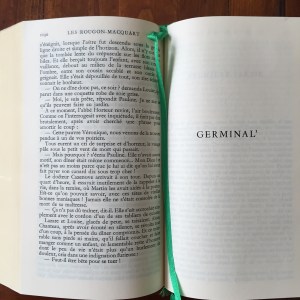
P.S. Wanting to read Germinal again after writing about Emile Zola, look what I found on one of my crowded bookshelves. For full disclosure, I found two copies. The other one belongs to my husband. We decided that we read the novel at the same time. Aw…


My original school copy.

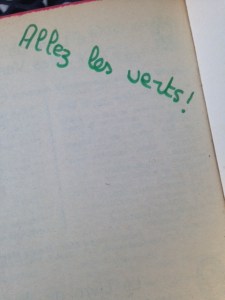
I used to add my first name in each of my books.

Apparently, while in high school I was a supporter of the French soccer team from Saint-Etienne, nicknamed Les Verts or The Greens, due to its home colors. Temporary fad, due to an irresistible player.

Thank you again for your support and positive energy.

A Month of French Authors/Un Mois d’Auteurs Français

Today for the letter Z, the last letter of the alphabet, I thought, “What the heck, I’ll do what I want!”

First, neither my partner nor myself could find any contemporary French female author. Then, even though I could have picked Florian Zeller, a young, brilliant, successful French author, I just couldn’t end such a challenge and not include the one and only Emile Zola.


There are many reasons why we become (or not) readers. Three years ago, I wrote about my childhood relationship with reading and ultimately with writing. It earned me the Freshly Pressed badge.

But if I could only list one author and one book that changed my world and hooked me for life to the world of words it would be Emile Zola and his novel Germinal. Which is the thirteenth volume in the series The Rougon-Macquard, his most renowned writing work.

In this fictional historical and sociological saga, Zola showcased a family living during the Second Empire. He gave flesh to the real historic and social events through authentic dialogues between characters that he chiseled from real people.

The French political activist, critic, and novelist is the founder of naturalism, a genre that grew in the late 19th century from realism. While realism focused on fact, logic, and impersonality over the imaginative, symbolic, and supernatural, Zola and his followers selected particular parts of reality: misery, corruption, vice, disease, poverty, prostitution, racism, and violence. They planted characters whose fates had been predetermined by forces of nature beyond human control.

Naturalism holds two conflicting views : Human behavior is the result of free will and yet also determined by natural laws.

Because naturalist writers don’t shy away from reality, as harsh as it can be, some scenes in Germinal are particularly graphic and frightened me when I read them under my blanket late at night, when my parents thought me asleep. However this raw depiction of the world matched my early understanding of the world, years before I could articulate my own thoughts. Kids and young teens perceive unfairness, inequality, and injustice even though they haven’t yet experienced their consequences.

I felt compassion for the characters who suffered most, anger against the ones who had everything, and jubilation when the poor won over the rich. My feelings are still so vivid so many years after I read Germinal and then each and every volume from the series. I will admit that a couple of books are not page turners and are even slightly boring. My husband who studied history, among other subjects, favors Balzac to Zola. But Nana, L’Assommoir or still La Bête Humaine kept me up for hours.

I couldn’t put down these books but I didn’t want them to end either. When I reach the end of a story that captivated me I will always feel the way I do on Sunday night or the day before back to school. I want these moments to last and last…

That’s what Zola gave me. The desire for more stories. Naturalist writers are often critized for their pessimistic views on the world. In fact, I would argue that their writing is a loud hopeful cry for a better world. For others. Some day.

Think of American writers John Steinbeck or Kate Chopin or still Jack London.

There is this game when someone asks you about the guests you would love to host around your table. My list changes over the years. But Zola has always been on it.

I would be so intimidated if I ever met him that I would not be able to say anything remotely smart. So I would more likely just thank him. For these unforgettable moments when I read his books. I was then only a girl, but these memories still give me the goosebumps when I evocate them, now that I’m living the autumn of my life.

My blogger friend Kimberly who lives in Italy wrote about her own experience as she read recently Germinal for the first time.


The Rougon-Macquard in the collection Bibliothèque de la Pléiade.

My husband surprised me with the series that he recently purchased from an American who didn’t read French.


J’aurais pu choisir le brillant Florian Zeller pour la lettre du jour, la dernière de notre alphabet.

Mais il m’était impossible de terminer ce challenge et d’omettre le grand Emile Zola.

Il y a trois ans maintenant j’ai écrit un billet sur mes premières expériences de lecture me donnant l’envie d’écrire aussi.

Mais si un écrivain et un roman m’ont à tout jamais rendue accro au monde des mots c’est Zola et son “Germinal.”

L’expérience de la lecture est personnelle puisqu’on lit le plus souvent seul. Comment expliquer alors que les sensations ressenties soient décrites si similairement par ceux et celles qui ne peuvent pas se passer de lire ?

Nous utilisons tous et toutes des descriptions identiques pour parler de ces moments où l’on oublie l’heure, le temps qu’il fait, y compris le boire et le manger.

Ce sont des heures de ma vie qui se sont écoulées alors que je dévorais les vingt volumes des Rougon-Macquard. Mon mari me rappelait l’autre jour que certains étaient moins passionnants que d’autres. Carrément ennuyeux, même a-t-il dit (en français plus explicite). Il a raison.

Mais qui, je vous le demande, a pu poser “Germinal” ou “Nana” ou encore “L’Assommoir” et “La Curée”?

Si vous lisez l’anglais je laisse un lien sur le billet d’une bloggeuse américaine qui vit en Italie avec sa famille. Elle a lu récemment “Germinal” et j’ai aimé retrouver à travers son expérience un peu de la mienne.

Quant à moi Zola restera le maitre du naturalisme, un genre parfois critiqué pour sa vision pessimiste du monde. En fait, je crois que les naturalistes (y compris John Steinbeck, Kate Chopin ou encore Jack London aux USA) ont écrit des livres empreints d’un espoir profond pour un monde meilleur.

Des années plus tard, j’adhère encore au credo de Zola.

Comme chaque jour pendant ce mois d’avril, j’ajoute des extraits de romans. Seulement de “Germinal” aujourd’hui ainsi que deux citations de l’auteur à propos de la création.


Extraits de “Germinal:”

“Des hommes poussaient, une armée noire, vengeresse, qui germait lentement dans les sillons, grandissant pour les récoltes du siècle futur, et dont la germination allait faire bientôt éclater la terre.”

“Devant le buffet ouvert, Catherine réfléchissait. Il ne restait qu’un bout de pain, du fromage blanc en suffisance, mais à peine une lichette de beurre ; et il s’agissait de faire les tartines pour eux quatre. Enfin, elle se décida, coupa les tranches, en prit une qu’elle couvrit de fromage, en frotta une autre de beurre, puis les colla ensemble : c’était « le briquet », la double tartine emportée chaque matin à la fosse. Bientôt, les quatre briquets furent en rang sur la table, répartis avec une sévère justice, depuis le gros du père jusqu’au petit de Jeanlin.”

“Les femmes avaient paru, près d’un millier de femmes, aux cheveux épars dépeignés par la course, aux guenilles montrant la peau nue, des nudités de femelles lasses d’enfanter des meurt-de-faim. Quelques-unes tenaient leur petit entre les bras, le soulevaient, l’agitaient, ainsi qu’un drapeau de deuil et de vengeance. D’autres, plus jeunes, avec des gorges gonflées de guerrières, brandissaient des bâtons ; tandis que les vieilles, affreuses, hurlaient si fort, que les cordes de leurs cous décharnés semblaient se rompre.”

“Était-ce possible qu’on se tua à une si dure besogne dans ces ténèbres mortelles, et qu’on y gagna même pas les quelques sous du pain quotidien?”


And two quotes from Zola himself :

“There are two men inside the artist, the poet and the craftsman. One is born a poet. One becomes a craftsman.”

“The artist is nothing without the gift, but the gift is nothing without work.”


Mexican Sage, as resilient as some of Zola’s characters


This post concludes the series of A Month of French Authors/Un Mois d’Auteurs Français from A to Z

Thank you so much for reading, for liking, and for commenting.

In a couple of days I will wrap up with a post-challenge post.

Meanwhile, bravo if you participated to the challenge and didn’t stop until the letter Z.

Again, thank you, everyone.


A Month of French Authors/Un Mois d’Auteurs Français

Late winter, when I jotted down my initial list of French authors I already knew that Marguerite Yourcenar would be my author for the letter Y.

On the French front, my partner was also doing her French-authors-list. Yourcenar was also her pick.

For obvious reasons : quickly we had realized that there weren’t that many last names starting with Y. In fact, back then we knew that Marguerite Yourcenar had a chance to go solo.

Then I started to draft my posts. My friend had sent me tons of links, tons of personal notes, tons of everything about these authors that we would follow from A to Z.  I read most of her material ahead of time. But it’s not until I prepared my post about Marguerite Yourcenar that I realized that we had written an almost exact sentence. Hers in French. Mine in English.

“C’est [Yourcenar]une maîtresse de la littérature, une somme de savoirs, je l’ai lue dans mes années lycée, durant lesquelles j’ai fait le plein de classiques avec beaucoup de plaisir.”

“She [Yourcenar] conquered my heart with Les Mémoires d’Hadrien, a novel I read in high school when I was in my phase “I need to read every book.” I remember thinking, “How can someone write like this? How can someone know so much?”

That’s the power of only a few books, I think, to leave the same impact on two women who grew up in two different parts of France and have never met.


Memoirs of Hadrian is an historical and philosophical novel, one of the few I never forgot. I will aways remember that the book took my breath away, left me quiet when the last page was turned. In awe. Told from the perspective of the dying Roman Emperor Hadrian to his cousin and successor the young Marcus Aurelius, the book explores the life of Hadrian but also the universal questions around humanity. Yourcenar must have read everything about Hadrian and the period of time to become the Emperor so seamlessly but also been an extraordinary observer of her fellow humans to write this tour de force of a book.
Memoirs of Hadrian, the third book from Yourcenar, gave her international visibility and recognition. In 1980, only seven years before she died she was elected to the prestigious Académie française, the first woman to break the glass ceiling.

One fact I didn’t know before I started this A to Z Challenge: Yourcenar died in Mont Desert Island, Maine where she and her lifelong partner Grace Frick had bought a house. In fact, Frick had urged Yourcenar to leave France in 1939, just before the turmoils of WWII. Yourcenar became an American Citizen in 1947. The two women stayed together until Frick’s death in 1979. Marguerite Yourcenar’s house in Maine is now a museum. The author is buried across the sound in Somesville.

Well, I just planned a summer field trip.


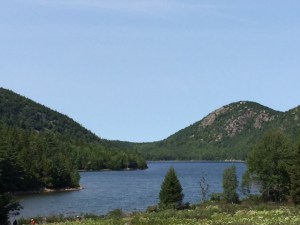
To honor Marguerite Yourcenar, all the photos for this blog post have been taken in Acadia National Park.

Marguerite Yourcenar c’est mon adolescence studieuse. Ces années de ma vie  les livres remplaçaient aisément les humains. J’étais dans mon trip “je veux lire tous les livres jamais écrits.”

Lorsque du front français ma compagne pour ce challenge m’envoyait ses suggestions d’auteurs et auteures, ses liens sur des sites français et sur son blog, je ne savais pas que ses mots à propos de Marguerite Yourcenar rencontreraient les miens. Exprimée dans deux langues différentes notre expérience, de si nombreuses années après avoir lu Yourcenar, était semblable.

“C’est [Yourcenar] une maîtresse de la littérature, une somme de savoirs, je l’ai lue dans mes années lycée, durant lesquelles j’ai fait le plein de classiques avec beaucoup de plaisir.”

“She [Yourcenar] conquered my heart with Les Mémoires d’Hadrien, a novel I read in high school when I was in my phase “I need to read every book.” I remember thinking, “How can someone write like this? How can someone know so much?”

Les Mémoires D’Hadrien, si vous n’avez pas lu le livre, sont racontées par l’empereur romain Hadrien qui de son lit de mort adresse une lettre au jeune Marc Aurèle, son cousin et éventuellement son successeur. Mon mari qui a aussi lu le livre m’a avoué s’être ennuyé (il a été un peu plus explicite en fait) alors que je me souviens avoir dévoré ce livre. Et pourtant mon mari adore l’histoire et a même un diplôme d’historien. Je me suis demandée si le style de Marguerite Yourcenar remuait plus les tripes des filles, même si elle s’est glissée sans effort apparent dans la peau d’un homme, pendant la réalisation de ce livre. Qu’en pensez-vous si vous l’avez lu?

Comme on apprend toujours quelque chose de neuf, j’ai découvert que Yourcenar avait quitté la France pour les Etats Unis en 1939, juste avant la seconde guerre mondiale répondant à l’invitation de son amie Grace Frick. Marguerite Yourcenar prendra d’ailleurs la nationalité américaine en 1947. Les deux femmes achetèrent ensemble une maison à Mount Desert Island, à deux pas du magnifique parc national d’Acadia dans le Maine et restèrent ensemble jusqu’à la mort de Grace Frick en 1979.

La maison est maintenant un musée et Yourcenar est enterrée tout près à Somesville.

Je sais déjà  je passerai une journée dès que je serai dans le Maine…

En l’honneur de Marguerite Yourcenar, j’illustre ce billet avec des photos prises à Acadia National Park.


Extrait de “Les Mémoires d’Hadrien:”

“Rien n’est plus lent que la véritable naissance d’un homme.”

“Peu d’hommes aiment longtemps le voyage, ce bris perpétuel de toutes les habitudes, cette secousse sans cesse donnée à tous les préjugés. Mais je travaillais à n’avoir nul préjugé et peu d’habitudes. J’appréciais la profondeur délicieuse des lits, mais aussi le contact et l’odeur de la terre nue, les inégalités de chaque segment de la circonférence du monde. « Notre grande erreur est d’essayer d’obtenir de chacun en particulier les vertus qu’il n’a pas, et de négliger de cultiver celles qu’il possède.”

Extrait des “Nouvelles Orientales:”

“Nous sommes tous incomplets, dit le Sage. Nous sommes tous partagés, fragments, ombres, fantômes sans consistance. Nous avons tous cru pleurer et cru jouir depuis des séquelles de siècles.”

“Et Marie s’en alla par le sentier qui ne menait nulle part, en femme à qui il importe peu que les chemins finissent, puisqu’elle sait le moyen de marcher dans le ciel.”

Extrait de “L’œuvre au Noir:”

“Vous autres poètes vous avez fait de l’amour une immense imposture : ce qui nous échoit semble toujours moins beau que ces rimes accolées comme deux bouches l’une sur l’autre.”

“Il est étrange que pour nos chrétiens les prétendus désordres de la chair constituent le mal par excellence. Personne ne punit avec rage et dégoût la brutalité, la sauvagerie, la barbarie, l’injustice.”


See you on Monday with the letter Z, the last one for the A to Z Challenge!

A lundi pour la lettre Z, la dernière de ce Challenge de A à Z!

Thank you for reading!

Merci de nous lire!

Enjoy the last stretch of the road if you participate to the A to Z Challenge!

Bientôt la ligne finale si vous participez au Challenge de A à Z!

A Month of French Authors/Un Mois d’Auteurs Français

The French author Françoise XENAKIS is going solo for the letter X

It’s good to have Xenakis alone as the auteure du jour. I still remember reading Zut, on a encore oublié Madame Freud in the 1980s. The book is not available in English, but its translated title would be something like, “Shoot, we’ve again forgotten Mrs. Freud.”

In this funny, impertinent book Xenakis focused her attention on the forgotten spouses of the most renowned male scientists, politicians, and artists.

Now in the US, we have so many books, especially for children, highlighting a forgotten female scientist, musician, artist, or writer. But in the 80s, Xenakis had written a modern book. Being a journalist by trade Xenakis wrote with wit and humor so this book is a fun yet instructive read.

I also remember reading with pleasure Mouche toi, Cléopâtre, her book about Cleopatra. Not a forgotten woman but one of the most unforgettable. No translation either for this book although the title would be funny in English too: Blow your nose, Cleopatra.

Françoise Xenakis spent her entire working life as a novelist and journalist. In the 1980s, she wrote a popular literary chronicle for the newspaper Le Matin de Paris. Since she was born in 1930, I don’t think she has written anything new lately.

Xenakis’ author page on Amazon can give you the list of her books, unfortunately only available in French.

If you enjoy music you may like to know that Xenakis is the widow of Iannis Xenakis, the music composer.

In the summer these branches will be my favorite parasol

Xenakis, on n’a pas vraiment besoin de la présenter, je me suis dit. Et puis j’ai réalisé que je l’avais lue dans les années 80, il y a un siècle de cela 🙂  Il est plus que vraisemblable que les jeunes français ne connaissent pas cette femme née en 1930.

J’avais bien aimé son livre  “Zut, on a encore oublié Madame Freud,” qui parle de façon humoristique et avec assez d’insolence des épouses de tous ces génies masculins que l’on encense dans la gloire alors qu’elles restaient dans l’ombre.

Maintenant aux Etats Unis on est entré dans une grande vague de livres pour enfants qui mettent en avant les femmes oubliées de l’histoire. Pas seulement de l’histoire américaine mais de partout à travers le monde. Qu’elles soient des artistes peintres, des musiciennes, des auteures, ou des femmes de science.

Xenakis était en quelque sorte une instigatrice de cette nouvelle vague. Je voulais dire “précurseuse” mais  “précurseur” ne semble pas avoir de forme féminine. Xenakis n’aimerait pas 🙂

En tous cas son style incisif et drôle, du à sa formation journalistique, rendent ses livres très engageants. Je me suis souvenue aussi de “Mouche toi, Cléopâtre” où pour une fois Xenakis ne parle pas de femmes oubliées de l’histoire mais de l’une des plus inoubliables femmes de notre histoire humaine.


Extrait de “Zut, on a encore oublié Madame Freud:”

“J’ai acheté ce matin un autre balai, j’ai bien noté, tu n’auras plus à me le redire, que le chuintement du balai de genêts te dérange. J’ai acheté un balai en poils de soie. Il se taira. Lui aussi.”

Extrait de “Désolée, mais ça ne se fait pas:”

“Le fiancé avait été conçu par une nuit de grand froid et forte pluie. Le whiskey ce soir-là devait manquer à la maison et le feu de tourbe être étouffé car, pour se réchauffer, l’homme et la femme O’Connor, transis de froid et d’humidité, avaient pourtant réussi à s’emboîter l’un dans l’autre, découvrant juste l’infime partie du corps nécessaire à chacun, et, rriv, le spermatozoïde avait bien peiné à forcer l’ovule. Sept mois plus tard était rrive Patrick O’Connor, le seul enfant de ce couple déjà usé, mais il était né chétif et de cette couleur blanc-bleu qui n’annonce rien de bon.”

Extrait de “Regarde, nos chemins se sont fermés:”

“Désormais, je suis devenue une mécanique rieuse et je fais rire les médecins, surpris d’abord, très vite beaucoup l’acceptent. Il n’y en eut qu’un à s’étonner, choqué, le rituel n’était pas respecté! Je ne le regardais pas comme le docteur, l’Herr Professor déifié dont on attend un mot, un seul, lui le détenteur de vie, il faisait partie de ceux qui aimaient que l’on murmure, yeux baissés, sa supplique, nous les manants ignares et faibles devant lui.”


See you tomorrow with letter Y!

A demain pour la lettre Y!

Thank you for reading!

Merci de nous lire!

Good luck if you participate to the A to Z Challenge!

Bonne chance si vous participez au Challenge de A à Z!

A Month of French Authors/Un Mois d’Auteurs Français

Two French authors for the letter W: Martin Winckler and Anne Wiazemsky

Plus Julie Wolkenstein for a small personal reason


Martin Winckler was born Martin Zaffran in Alger. At eight years old he returns to France with his parents. After finishing med school Martin Zaffran practices rural medicine from 1983 to 1993. In addition to being a physician he also wrote under his pen name Winckler.

Martin Winckler is an important contributor to the ongoing debate about health and health care in France. Several thousands of visitors visit his website and particularly the section contraception where he generously and honestly provides information. In his novels Winckler treats of anything related to humane health.

The Case of Dr. Sachs is the English translation of his French best seller La Maladie de Sachs.

His Amazon Author Page lists his numerous novels.

Spring hugging our Maine lake cabin

Martin Zaffran/Winckler est à la fois un médecin et un écrivain. Après avoir pratiqué la médecine rurale pendant dix ans il se consacre à l’écriture, tout en conservant un poste de médecin à mi temps. Il aborde dans ses romans la médecine et ce qui touche à la santé humaine.

Ma partenaire pour ce challenge m’a dit avoir beaucoup appris en écoutant Martin Winckler sur France Inter où de septembre 2002 à juillet 2003, il a préparé et lu chaque matin “Odyssée,” une chronique où il exprima franchement ses idées sur la médecine en France et la façon dont les séries télévisées sont diffusées par les chaînes françaises.

Son site personnel est une mine d’information sur la santé en France. La section “contraception et gynécologie” est visitée par plusieurs milliers de lecteurs et lectrices.

“La Maladie de Sachs” est son livre le plus connu du public. Il est d’ailleurs traduit en anglais.


Extrait de “La Maladie de Sachs:”

“Pendant dix ans d’études, j’ai appris à palper, manipuler, inciser, suturer, bander, plâtrer, ôter des corps étrangers à la pince, mettre le doigt ou enfiler des tuyaux dans tous les orifices possibles, piquer, perfuser, percuter, secouer, faire un “bon diagnostic”, donner des ordres aux infirmières, rédiger une observation dans les règles de l’art et faire quelques prescriptions, mais pendant toutes ces années, jamais on ne m’a appris à soulager la douleur, ou à éviter qu’elle n’apparaisse. Jamais on ne m’a dit que je pouvais m’asseoir au chevet d’un mourant et lui tenir la main, et lui parler.”

Extrait de “Le chœur des femmes:”

“Je me tourne vers la patiente et je m’ouvre à ses plaintes, à ses peurs, à ses pleurs, ses espoirs, ses désirs, ses échecs, ses plaisirs, je me fonds dans son air, son couplet, sa ballade, son chant solo montant du choeur des femmes.”

Extrait de “Abraham et fils:”

“Un jour, Luciane m’a demandé pourquoi souvent je ne disais rien.

Je n’ai pas su lui répondre à ce moment-là. À présent, je crois que je sais. Si je ne dis rien, c’est parce que je suis trop occupé à regarder, à écouter et à essayer de comprendre ce qu’on m’a dit. Tout le monde a des histoires à raconter. Et moi, je veux connaître toute l’histoire, alors j’écoute jusqu’au bout. Et une fois que c’est fini, je repasse l’histoire dans ma tête. Les mots ou les moments qui m’ont le plus impressionné, que j’ai le plus aimés.

Et puis, je regarde ceux qui racontent. Leurs yeux, leur bouche, leur visage, leurs mains. Je les regarde parce souvent leur corps dit autre chose que leurs mots. Ils disent oui en secouant la tête, ou parlent en regardant de l’autre côté. C’est comme s’ils racontaient deux histoires en même temps. Et souvent, je passe du temps à me demander si les deux histoires vont bien ensemble.”


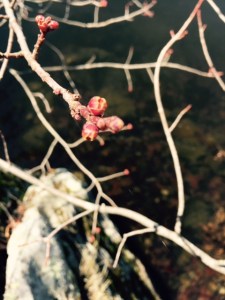
Live from Maine. Little bud will become a leaf.


Anne Wiazemsky was a well-known actress before she became a writer. But writing was perhaps coded in her DNA, since Anne Wiazemsky is the grand-daughter of the illustrous French novelist François Mauriac. Although written in 1927 and 1932 Thérèse Deyqueroux and Le Nœud de Vipères, two of the many novels Mauriac wrote, were staple books in French schools when I was growing up. In fact, I read and studied both novels in middle school.

Many of Anne Wiazemsky’s books are biographies or autobiographies, inspired by her family background and her own life. Her mother is Mauriac’s daughter, and her father a diplomat born in a royal Russian family who left Russia after the Revolution.

As an actress, Anne Wiazemsky met the French film maker Jean-Luc Godard when she was still a teenager. Although twenty years stood between them they married and separated thirteeen years later. Wiazemsky wrote about their private and professional relationship in Une Année Studieuse et Un An Après.

Anne Wiazemsky also wrote about her challenging working relationship with Robert Bresson, another notorious French cineaste in her book Jeune Fille.

As an author, Anne Wiazemsky has earned a respectable reputation and several of her books have received awards. Among them the Grand Prix du roman de l’Académie française for Une poignée de gens, adapted to the movies with the author’s own screenplay.

Unless I wasn’t thorough, I only found one of her books translated in English. It is My Berlin Child that tells of her mother’s youth in war-torn Berlin. The movies that feature Anne Wiazemsky as an actress are, however, available with English subtitles. This link on Amazon lists several.


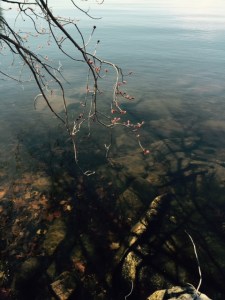
Still live from Maine. After snow melts, branches are found at the bottom of the lake.


Je n’ai pas la moindre idée de ce que c’est que d’être la fille ou la petite fille d’un auteur très connu. Est-ce un avantage ou un obstacle à devenir aussi un auteur?

Anne Wiazemsky, fille de Claire Mauriac, elle même la fille de François Mauriac, a d’abord été une actrice avant d’écrire. Elle dit que c’est un prêtre qui l’aurait encouragée à prendre la plume alors qu’elle vivait à Caracas (son père était un diplomate.)

En tant qu’actrice, son nom est associé à celui de Jean-Luc Godard, rencontré par hasard alors qu’elle n’avait pas encore vingt ans. Malgré les vingt années qui les séparent, ils se marieront rapidement après cette rencontre et resteront ensemble pendant treize ans.

Inspirés par la jeunesse de sa mère dans le Berlin déchiré de la guerre, ou encore par sa vie avec Godard, à la ville et à l’écran, la plupart des livres écrits par Anne Wiazemsky sont biographiques ou autobiographiques. 

Sa bibliographie complète est ici.

Extraits de “Jeune fille:”

“C’était le printemps et pour la première fois depuis deux ans, depuis la mort de mon père, je l’attendais avec impatience. Dans mon cahier de textes, j’avais recopié ces lignes extraites d’un roman de mon grand-père, François Mauriac: “Le bonheur, c’est être cerné de mille désirs, d’entendre autour de soi craquer les branches.” Si la première partie de cette définition m’était encore inconnue, je commençais à entrevoir la seconde : j’écoutais, j’entendais “autour de moi craquer les branches”. C’était diffus, nouveau, troublant. Cela surgissait sans raison, n’importe où.”

Extrait de “Mon enfant de Berlin:”

“Elle souhaite n’exister que par son travail depuis son entrée à la Croix-Rouge, un an et demi auparavant. Son courage moral et physique, son ardeur font l’admiration de ses chefs. Ses compagnes, parfois issues de milieux sociaux différents du sien, ont oublié qu’elle était la fille d’un écrivain célèbre, François Mauriac, et la considèrent comme l’une d’entre elles, rien de plus. Cela la rend heureuse. Elle aime ce qu’elle fait, la nécessité de vivre au jour le jour.”

Extrait de “Une poignée de gens:”

“Puis les sanglots et les larmes s’apaisèrent et l’étreinte des frères se relâcha. Micha recula pour s’essuyer le visage avec un pan de sa chemise. Brisé par le vin et l’émotion il avançait de biais, tel un ours. Nathalie, encore sous le choc de ces récits, lui tendait son mouchoir. Micha contempla avec curiosité le joli petit morceau de soie brodée aux initiales de sa belle-soeur et le lui rendit. C’est une nappe qu’il me faudrait, dit-il.”


And I am adding the name of Julie Wokenstein, only because she’s teaching comparative literature at the University of Caen where I also studied the same subject, before pursuing at the Sorbonne in Paris.

J’ajoute le nom de Julie Wokenstein, seulement parce qu’elle enseigne la littérature comparée à l’université de Caen où j’ai aussi étudié ce sujet, avant de continuer mes études de lettres à La Sorbonne.


See you tomorrow with letter X!

A demain pour la lettre X!

Thank you for reading!

Merci de nous lire!

Good luck if you participate to the A to Z Challenge!

Bonne chance si vous participez au Challenge de A à Z!

A Month of French Authors/Un Mois d’Auteurs Français

Today for the letter V the French authors Antonin Varenne and Fred Vargas


I’ve never met or even read Antonin Varenne, but he’s another one that my French partner saw at the Quai des Polars. The French author shared the stage with the most famous American crime fiction authors. My friend found Varenne « charmant et humble, impressionné de se trouver parmi ces baraques américaines. »

Roughly, she found him charming and humble and visibly intimidated to be seated among these huge big American names.

Based on the fact that Antonin Varenne’s first novel, published when he was thirty-three years old, brought him immediate attention and that he won the coveted Prix Quai du Polar in 2012 for his novel Le mur, le Kabyle et le marin, before he turned forty, he should have relaxed.

This award-winning novel is available in English. Only another one among his eleven novels is also available in English.

Interestingly, Varenne was discovered by the editor who publishes Fred Vargas, the female author for the lettre du jour.

His personal life is pretty interesting too. Born in Paris in 1973 he was only a few months old when his parents started to travel all over France and then aboard their sailing boat. Varenne didn’t return to France until he was twenty to attend the university.

After earning a master in philosophy he worked as a tower climber. This is the closest translation I could find to describe the job of these men who climb during the building of skyscrapers, bridges or on any other tall construction site. If you know the proper term, please keep me posted!

Antonin Varenne has worked in Toulouse, in Island, and Mexico before setting camp at the foot of the Appalachian mountains (No idea where exactly). In any case, this is surrounded by this American landscape that he started to write.

Back to France, married with a child, Antonin Varenne and his family settled in the Creuse where the author is now writing full time.

While browsing the Internet I read this sentence about Varenne’s novel Bed of Nails:

“[Varenne] expertly throws a bright light on a fashionable city’s [Paris] hideous hidden face.”

When I chose my topic for the challenge it was my desire to showcase younger French authors or at least some who depict a more real France, not only picture-like and preoccupied with food, wine, and perfume, and particularly a less sophisticated Paris. Believe me, Paris is not only beauty.

Looks like Varenne fills the need.

Climbing jasmine or a deliciously scented part of spring

Antonin Varenne me plait déjà avant de l’avoir lu. Mon amie française l’a entendu parler à l’un des Quais du Polar. Entouré des plus grandes pointures américaines de la littérature noire elle l’a trouvé charmant, humble et intimidé.

Et pourtant celui que l’éditrice de Fred Vargas repéra avec son premier manuscrit ne devrait pas se laisser impressionner. En effet dès la publication de son premier roman à l’âge de 33 ans Varenne n’a cessé de satisfaire son lectorat et d’impressionner la critique.

The Grand Prix du Polar 2012 l’a amené au niveau des plus grands. Et cela semble mérité, basé sur les citations de ses livres que j’ai découvertes sur Babelio notamment. J’ai particulièrement aimé les dialogues.

La vie personnelle de Varenne ressemble aussi à un roman. Pas nécessairement noir.

Agé de quelques mois seulement ses parents le font voyager aux quatre coins de la France avant d’explorer les mers et océans à bord d’un voilier. Varenne ne rentrera en France que pour poursuivre ses études universitaires. Après avoir obtenu une maitrise de philo il devient alpiniste du bâtiment et travaille à Toulouse, au Mexique et en Islande. Il se pose aux pieds des Appalaches où il travaille à son premier roman.

Je ne résiste pas à ajouter le lien pour la fameuse Appalachian Trail que je rêve de parcourir un jour. Elle débute en Georgie et la dernière section arrive dans le nord du Maine, section reconnue pour sa difficulté. Bill Bryson a écrit son hilarant mais aussi très profond livre A Walk in the Woods, basé sur sa propre expérience (partielle mais suffisante pour apprécier le challenge des Appalaches). En France, le livre s’appelle “Promenons-nous dans les bois”. Mais je m’égare… Revenons à Antonin Varenne.

Maintenant dans la Creuse avec sa femme américaine, leur enfant bilingue et un chien du Mexique, notre auteur du jour se consacre exclusivement à l’écriture.

Des photos et vidéos intéressantes sur Babelio.

Et puis, of course, quelques extraits de certains de ses romans.

Extraits de “Battues:”

“Les paysans savent à quelle vitesse leur trace s’efface. La terre est un outil de travail qui donne tant qu’on a la force de le faire. Il reconnaissait que les dégâts mécaniques risquaient de pourrir la vie, mais la nature (…) n’avait pas besoin qu’on la défende. Elle nous boufferait tout cru si on lui tournait le dos quelque temps.”

Extrait de “Trois mille chevaux vapeur:”

“A chaque fois que je regarde un feu, je me dis la même chose. Que les premiers souvenirs sont toujours des feux de camp entre gamins et que les vieillards, à la fin de leur vie, tirent des fauteuils devant les cheminées pour s’en rappeler.”

Extrait de “Le Mur, le Kabyle et le Marin:”

“[Il] lui avait tout expliqué. Que l’on n’échappe pas aux pièges que l’on pose derrière soi, qu’un jour ou l’autre, l’on revient sur ses pas pour y tomber. Que les situations peuvent manquer de sens mais jamais de logique, et que la logique manque d’imagination.”

Extrait de “Fakirs:”

“Avant même de discerner les tatouages sur le crâne rasé, le visage couvert de lignes tribales et percé d’anneaux, John avait reconnu Alan, aussi déplacé dans ce décor naturel qu’un ukulélé sur la banquise. A mesure qu’il s’était approché il l’avait entendu adresser des insultes aux arbres, aux chemins de terre qui dégueulassaient les chaussures et aux connards qui vivaient dans la forêt. Alan Mustgrave avait balancé un coup de pied dans une bassine, où trempaient les slips et les chaussettes de John.”


In the deliciously scented department, gardenias rank high


Fred Vargas was born Frédérique Audoin-Rouzeau in 1957. She’s the daughter of the French author Philippe Audoin and the twin sister of Jo Vargas, the painter. Both sisters took the same pseudonyme which refers to Maria Vargas, played by Ava Gardner in the movie The Barefoot Contessa. Fred Vargas has also a brother who is an historian, specialist of WWI. He’s the inspiration for the character Lucien Devernois in Vargas’ series The Three Evangelists. The third volume will be released later this summer.

Her Amazon Author Page is perfect with a succinct but still complete biography and of course the impressive list of novels she wrote, ALL translated in English.

And if you want to immerse yourself in some French TV, this YouTube video is a sample of the novels adapted to the screen.


Fred Vargas, de son vrai nom Frédérique Audoin-Rouzeau, est la fille de l’écrivain Philippe Audoin et d’une ingénieure chimiste. Son frère est l’historien Stéphane Audoin-Rouzeau et sa sœur jumelle la peintre Jo Vargas. Fred Vargas est titulaire d’un doctorat en histoire sur la peste au Moyen Âge. Elle travaille un temps comme chercheuse au CNRS, spécialiste d’archéozoologie. Elle travaille également sur des chantiers de fouilles archéologiques, notamment rue de Lutèce (face au Palais de Justice) à Paris et au monastère de La Charité-sur-Loire.

De la bouche de ma partenaire dans cette chasse au fil de l’alphabet, Vargas parvient à intégrer poésie et humour dans ses polars. Elle trouve le personnage d’Adamsberg particulièrement attachant, mais aussi les trois historiens rencontrés dans plusieurs de ses livres. Vargas occupe une place à part pour elle dans le paysage français du polar. Et elle a beaucoup aimé les adaptations télévisées de Josée Dayan pour certains de ses romans.

En tous cas c’est en regardant YouTube que je me suis dit que les livres de Vargas plairaient sans doute à mon mari.

Comme toujours, Babelio reste une source de données pour trouver biographie, bibliographie, mais aussi critiques et citations, et plus si vous y passez plus de temps.

Que pensez-vous des romans de Fred Vargas, l’une des auteures les plus vendues en France ?


Extraits de “Debout les morts:”

“La connerie militaire et l’immensité des flots sont les deux seules choses qui puissent donner une idée de l’infini.”

Extrait de “L’homme aux cercles bleus:”

“On naît et on crève, et au milieu on s’échine à perdre notre temps en faisant semblant de le gagner…”

Extrait de “Un lieu incertain:”

“Je rentre dans le droit chemin qui, comme tu le sais, n’existe pas et qui par ailleurs n’est pas droit.”

Extrait de “Pars vite et reviens tard:”

“- Qu’est-ce qu’il fait votre ami ? demanda Adamsberg.

– Son premier métier est d’irriter le monde mais ce n’est pas payé. Il exerce cette activité bénévolement.”

Extrait de “Dans les bois éternels:”

“-C’est compliqué les femmes, dit Robert, suivant toujours son idée.

-Mais c’est beau.

-C’est bien ce que je disais, souffla le vieux. Plus c’est beau plus c’est compliqué. On ne peut pas tout comprendre.”


See you tomorrow with letter W!

A demain pour la lettre W!

Thank you for reading!

Merci de nous lire!

Good luck if you participate to the A to Z Challenge!

Bonne chance si vous participez au Challenge de A à Z!