From A to Z, Twenty-Six Funny, Weird, Vivid French Expressions


BROYER DU NOIR


Embed from Getty Images


For the longest time, people thought that moods grew from the grinding of the black bile secreted in the stomach. In the 19th century, the expression “broyer du noir” started to mean feeling depressed.

There is actually another French expression around the bile. Se faire de la bile means to worry.


Perfect equivalent: Feel blue or Have the blues


See you tomorrow for the letter C, part of the A to Z Challenge!

From A to Z, Twenty-Six Funny, Weird, Vivid French Expressions


AVALER DES COULEUVRES


Embed from Getty Images


Literally: Swallow garter snakes

Best equivalent: Drink the Kool-Aid


This post is the first of twenty-six that starts the 2018 A to Z Challenge. Each will be published every day but Sunday, for the entire month of April.

Today is an exception. Maybe because it is April Fool’s Day, Poisson d’Avril for the French.

I already wrote about the twist French give to the tradition of practical jokes. This post is from 2011, when none of you knew me 🙂

See you tomorrow for the letter B!

French Friday: Coming Soon To Your Inbox

When I lived in France, I had never considered that one day I would be speaking alternatively in English and French every day of my life, for the rest of my life.

Who would have known that this lifestyle would distance me from my homeland, but also reignite a deeper  connection with some of the most interesting aspects of my mother tongue?

I deliberately use “mother tongue” because it’s through my mother’s way of speaking that I noticed the richly evocative vocabulary that most people in Normandy used. Expressions that triggered visuals infused my mother’s conversations.

When I was about five and heard for example that it was not good de “Casser du sucre sur le dos de quelqu’un,” I literally saw someone breaking lumps of sugar on someone’s back. In American English the best equivalent would be bad-mouthing someone. There is a French equivalent for bad-mouth. But who would insist that it is better than breaking sugar on the back of someone? If my mother spoke about someone who had a tough skin this person was a dur à cuire or hard to cook.


It’s only when I moved to California that I started to compile these savourous expressions that have provided me more than just words but sensory feelings.

As much as I love the English language that I find often more effective than French, I adore these French expressions.

Since all languages evolve, some of these French expressions age, fade and even vanish. Others appear. And sometimes, an old one is trendy again.

So without further ado, here is my theme for the 2018 A to Z Challenge:

From A to Z, Twenty-Six Funny, Weird, Vivid French Expressions


From April 1st to the 30th and following the alphabet, participants to the challenge post every day but Sundays. I’ll do the same, and I hope these posts will make you smile, laugh, or maybe think that these French people are even stranger than you thought.

Since I keep finding new expressions, I should be able to pursue this challenge for another two years 🙂

Check your Inbox in April! See you there!

 

P.S. The flowers are from my backyard. If you and your home are still in winter mode and miss the spring, I hope they will bring a little bit of color to your own yard.


FRENCH FRIDAY: HIGH SCHOOL VISITS IN FLORIDA

Last Friday, I found myself at the very tip of Northern Florida for a full day of school visits.

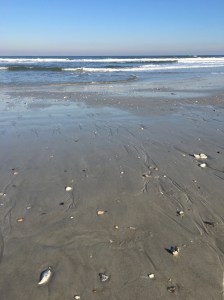
As I drove on this gorgeous stretch of Florida I was tempted to skip the events and go for a hike and a picnic. The blend of states parks, beach parks, marshes, creeks and ocean is distinct from the rest of the state and on Friday the early morning fog rising from the Amelia River tugged at me, the promise of a beautiful day.

But I’m so glad I only skipped my weekly French Friday blog post 🙂

School visits are always special. These five last ones included.

At the first high school, the librarian had invited me to show up before my presentation so I could have breakfast. She spoke of a continental breakfast. And it would have been plenty enough. There is nothing better than fresh coffee, donuts, banana bread, and fresh fruit to put everyone in a good mood, right?

No, there are the breakfast sandwiches that nobody but locals know about.

To be frank I’m not a huge breakfast person, but I always try what the locals eat. When I am invited somewhere I am part of a place, even for the time of a visit. Or for the time of a breakfast ham, cheese and egg on an English muffin.

And when there is a story behind what I eat, it’s even better.

The chair of the English department was there and as any good English teacher he told good stories. The one behind the breakfast sandwiches is here. In his own words, it was the best idea anyone had to give another life to a closed gas station. In a great American way, although some people thought that serving food in a gas station was weird many more and even the reluctant ones gave it a chance. Their patronage brought the joint to the Washington Post. Not bad. The breakfast sandwich I picked was great. I only wished I could have enjoyed it, slow and easy, but I’m always a little nervous before speaking in front of many people. Next year I will make sure to stop by T-Rays to celebrate the end of the day. Have a look it’s really cool.

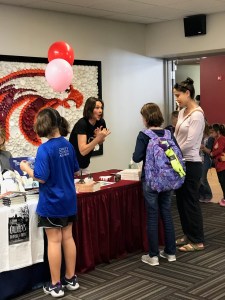
Parents play a huge role in American schools. Including at that high school. I spotted some dads signing in for the seniors’ field trip. And a mom stamped my novels (I use an Eiffel Tower and a small café stamps when I sign) so I only had to write a short sentence and add my name. While we worked together we spoke. Of course. She hoped to live in France for a little while, at some point. I love it when people share their dreams because it’s the only way to realize that we are all so similar despite our differences.

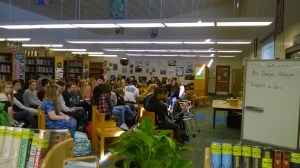
At this high school, I met with three groups of sophomores in their media center. I love libraries and librarians. This school is so fortunate to have a huge media center and an amazing librarian who cares so much for the students. I spoke about writing, writing in a foreign language and of France too. I had downloaded more music and I played extracts to cut the presentation and also whenever I felt they needed a break. And when I needed one too 🙂

At the end of the third presentation one of the teachers told me that I was like a teacher. I thanked her. And she added that like a teacher I warmed up as I went and adapted to my audience. I had not really noticed but then saw that my notes were left on a chair. I had not once looked at them. Q&A was fantastic. Few kids had traveled to Europe and even less to France, so it’s always with a mix of humility and pride that I try to introduce my small but complex native country.

I had an hour ahead of me to drive to a neighborhing high school, half an hour away. Traffic was jammed, so I missed the lunch graciously offered by the French teacher and munched on my cereal bars instead. I missed that breakfast sandwich.

There, I met a mix of freshmen, sophomores, juniors and seniors, all taking French. They had read my novel in class and had tons of questions.

Their French teacher being French it was an additional treat.

My most favorite moments of the afternoon:

  1. What do you miss most about France ? Some people more than things.
  2. What do you like best about the USA ? The list is too long to even start one.
  3. How long did it take you to be fluent in English ? You don’t want to know.
  4. Can you say: “squirrel” because our French teacher can’t ? She and I are even.

Of course, I answered each and every question and agreed to repeat a few words in English. We joked and laughed and this is what we all should do more often.

On Friday, however, being invited to two high schools located in Florida made it impossible to ignore the shooting that had happened 48 hours earlier, on Valentine’s Day, in another high school in the very same state.

I knew I would make sure to talk to the media specialist and the French teacher before meeting their students. I didn’t have to. Teachers and staff told me upfront that it had been hard to be at school since then, but that life had to go on. At the end of the day an announcement reminded students that support was available to anyone who needed to talk.

And yet it was hard to imagine a similar tragedy happening on these bucolic campuses.

I bet people thought similarly in Parkland.

On my way out I saw groups of teenagers waving goodbye to each other, hugging each other. There was after all a three-day weekend in perspective. They all looked so young, so full of energy and possibilities. And I felt suddenly sad and angry too.

Knowing that my own children had been spared from such tragedies through their entire schooling didn’t change my mood.

I’ve always favored the American inclusive schooling to the more rigid French style I’ve known. But I’ve also envied French students for the safety of their schools. Even now with terrorist threats ever present on the French soil, no student has ever shot his classmates.

Our American children and teenagers could be as safe as the French.

It is an American paradox I will never understand. When people are so civil and courteous in the street, in the stores and on the roads what justifies their need for weapons? When they come together as one in times of hardship what explains the unconditional support for the Second Amendment ?

As our nation was mourning again the loss of young lives, I felt sick and tired of hearing that we needed to keep them and their families in our thoughts and prayers.

Of course, we would. How couldn’t we?

But thoughts and prayers obvioulsy have not exactly worked.

Over the last years, I’ve signed every possible petition regarding gun control and also the need for a better understanding and management of mental health.

Obvioulsy, they have not worked either.

Each time a school shooting or a mass shooting happened we all believed it would be the last.

And yet.

I felt angry.

And I did not want to pray.

So I turned on the radio, which I often do when I drive.

This is how I first heard of the Florida man who decided to turn his own AR-57 in to the sheriff’s office and asked them to destroy it after the school shooting.

If you missed it you can read the interview highlights here. His Facebook post went viral.

I listened to the much longer conversation he had with NPR. At some point, he mentionned that thoughts and prayers didn’t feel enough for him and that the tragedy called for action.

It’s only one man, one action.

What if…


The soft Atlantic waves


Pour vous qui vivez en France, ce court article paru dans Le Monde recense les fusillades les plus meurtrières aux USA depuis 25 ans. Tristement, je les ai toutes vécues. Après Columbine on a tous ici cru qu’un changement important se produirait. Après Sandy Hook, c’était certain.

Le congrès américain a explicitement interdit la vente d’armes semi automatiques entre 1994 et 2004. Mais depuis que la loi a expiré il est très facile de se les procurer de nouveau pratiquement n’importe où aux US. Seuls les états de New York, de Californie, le district de Columbia, et cinq autres états en interdisent la vente. Les mêmes états limitent aussi le nombre de cartouches qui peuvent être chargées dans une arme. Malgré cela, tout est fait pour annuler les interdictions, légalement et illégalement, en modifiant de façon mineure les armes.

Si vous lisez l’anglais, cet article du New York Times explique la situation actuelle.

Depuis Parkland, les lycéens expriment pour la première fois leur colère au-delà de leur douleur. Manifestations inhabituelles prennent place et la maturité des filles et garçons que nous entendons s’exprimer me donne raison. Je ne cesserai jamais de croire que l’avenir et les changements importants sont entre les mains des adolescents d’aujourd’hui.

En les écoutant depuis ce drame, je me dis que peut-être nous sommes enfin arrivés à un point de non retour.

Malheureusement, entre le moment où j’ai écrit ce billet et aujourd’hui il y a déjà un énorme nuage noir qui planne et laisse augurer de débats houleux.

Si vous le souhaitez, voici un article récent qui illustrent la longue route qui nous attend. Celui sur la situation de la santé mentale aux USA est intéressant. Les deux sont publiés dans le New York Times et peut-être pouvez les lire dans le Monde qui reprend régulièrement leurs articles.

J’ai souvent écrit à propos des rituels américains, particulièrement dans les écoles, rituels qui parfois m’ont fait sourire tant ils sont différents de ceux de la vie scolaire française, souvent étonnée, jamais fatiguée.

Que la tragédie de Parkland devienne un rituel scolaire américain serait monstrueux.


French Friday: For Humankind

With the Republican running candidate blasting his opinions about women during his campaign and the #Metoo movement that followed, women have clearly taken the public debate stage.

Whether we appreciate the courage of the women who come forward or fear excesses in the process, it is impossible to ignore the momentum and to deny the need for real equality between genders.

Since it is a very heated debate it’s important, I think, to keep our sense of humor and critical sense as we plow our way along the arduous road.

Just this week, a few events show how the best intentions can fall flat and also how even women can see things very differently.

Pretty much everyone likes Justin Trudeau, the Prime Minister of Canada. And pretty much everyone noticed him when he corrected a woman who said “manhood” and offered “peoplekind” instead.

Humankind or even humanity would have worked just fine. Despite the fact that Trudeau interrupted a woman while she was speaking, his intentions were no doubt sincere. Inclusion is necessary, but sometimes the desire to achieve it can lead to faux-pas.

Canada is still making genuine efforts. Take this magazine that printed two versions of its latest issue. One is sold 26 cents more than the other to reflect the disparity of salaries between men and women.

In the U.S., Macy’s is soon to introduce a collection of modest clothing and hijabs to capture a slice of the Muslim women’s clothing market.

At the same time in Iran, women are taking their veils off, putting their lives in danger, to obtain the right to choose whatever clothes they wish to wear.

Who is right? Maybe there is no right and wrong when it comes to women’s freedom to be who they want to be.

In any case, women are playing centerstage in these early months of 2018.

Now that I chose to write a month of French expressions for the A to Z Challenge in April, I could only notice that some of the most common French idioms are in fact sexist.

I was tempted to list them but have decided otherwise. I didn’t want to put de l’huile sur le feu, as we say in French (oil on the flame), but instead focus on the delightful aspect of these small words and short expressions. Thanks to my early personal mistakes, I quickly learned that all tell a lot about a country and its culture. Many are not perfectly exchangeable from one language to another. Often, they still have an equivalent. Sometimes, nothing can exactly convey the idea.

To my own surprise, I quickly compiled a first draft of my 2018 list, only missing as always an expression for the letter X.

As I went through the list I noticed that several expressions had something to do with food.

Now, it was telling something about France that men and women alike would agree on.


And nothing and nobody can be better than animals to bring smiles to humankind.


These photos have been taken in my native Normandy, where a few inches of snow fell over the last few days, transforming the landscape in a scenery that I rarely got to enjoy when I lived there as a child.


Belated French Friday: C’Est Ouf to Meet Smart, Kind Middle School Students on Crêpes Day

Post-classroom visit

It’s a belated French Friday post, only because I was meeting a class of 8th graders yesterday.

Which was ouf.

Last Friday, I left you with two French expressions. Dan used the services of Google and suggested “Get the pill” for “Se dorer la pilule” and “This is a pick of ouf” for “c’est un truc de ouf.”

Thank you, Dan for trying. Really, that was cool. But I cannot give you an A. That’s Google’s fault, really.

Google, can you hire me?

* Se dorer la pilule doesn’t mean to get the pill but to get a tan, also simply to relax without doing anything.

Get the pill would be “Prendre la pilule” and it would also be said in reference to the birth control pill.

On the other hand, we don’t have the exact equivalent of the vivid American expression: Take a chill pill.

* Ouf is Fou, only written backwards. Fou in French means crazy.

C’est ouf means it’s crazy.

Un truc is a thing.

C’est un truc de ouf means it’s a crazy thing.


So, yes, meeting with the kids yesterday was ouf, in a very good way.

C’est ouf!

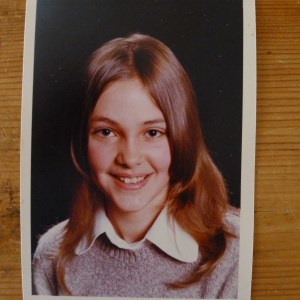
Following your advice, I went with a selection of photos depicting France and Paris. One one girl had been to Paris, so all of them enjoyed my personal Normandy selection. And they smiled when they saw me at their age.

As expected, the addition of music was a great idea. I played music while the students settled in. Then I picked classic French songs and extracts of contemporary songs from singers and bands and played them during the presentation. Even the teacher could not sit still when she heard some French rap.

Since the main characters of my novel eat at different cafés, I added a few slides about typical fare that Parisians and French eat at their favorite cafés.


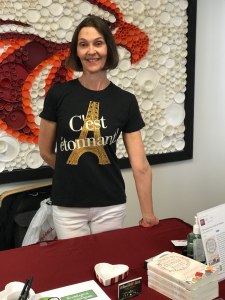
And I wore my special T-shirt 🙂

The kids loved my last slides about the Chandeleur. Eating crêpes on February 2 is yummier than waiting for a groundhog to see or not his shadow.

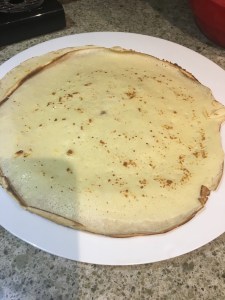
So after the school visit I rushed home to prepare my batter. When my four children lived at home I doubled and sometimes even tripled the recipe and we ate crêpes for dinner. Now my husband and I have a couple for dessert and eat the leftovers warmed up for breakfast.

But when I arrived we changed our minds, so I made a regular batter.

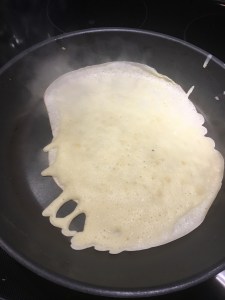
The batter, my mom wrote on her recipe, should not be too thin and should not be too thick. That’s the reputation people from Normandy have: undecided 🙂 But her crêpes batter is the bomb.


First crepe is like a first draft. Necessary.

Better

My husband added a sunny-side-up egg on our crepes

We ate until there was no batter left 😦

I wish you all a fantastic weekend!

If you are a football fan, enjoy the Super Bowl. I know of a few diehard Patriots fans around me. It’s in my nature to cheer for the underdog. Although, on Super Bowl I will be found in a park or at the movies, which are pretty quiet on Super Bowl.

Just saying 🙂


French Friday: Reading to Understand Mental Illness

Although I skipped my yearly participation to the Multicultural Children’s Book Day I still support this national event, which will be celebrated on Saturday, January 27. Multicultural Children’s Book Day highlights the need for diverse books. More and more editors and publishers are aware that children become readers when they see themselves in the stories they read and develop more empathy when they discover how other children live.

Most often, books suggested and reviewed on Multicultural Children’s Book Day represent minorities’ cultures and faiths.

And those books are as important as ever.

But I decided to come up with my very short personal selection of books that also represent a form of difference. The idea grew from an exceptional novel that treats of mental illness. I read Turtless All the Way Down a few weeks ago but the story still sits on my mind.

The following books portray children and teenagers who deal with mental disorders, some less severe than others. These children or teenagers’ lives are ‘different,’ much more challenging than ‘normal’ lives but not less fulfilling. In fact, in all these books these kids and teens are very inspiring.

Compassion for them is one thing.

Understanding or trying to understand what they go through is another.

Reading about them is a crucial step.


For Teenagers:

I don’t need to introduce the author behind the debut novel Looking for Alaska and the sensational best seller The Fault in Our Stars.

John Green is not only an exceptional writer he has also been candid with the fact that he has Obsessive Compulsive Disorder (OCD). In Turtles All the Way Down he depicts sixteen-year-old Aza’s own struggle with such accuracy and integrity it will break your heart and still make you smile and definitely root for her.

This is pure John Green, so expect amazingness. The dialogues are especially great, witty and right 0n. I love Aza’s best friend so much. And I could only relate to her mother’s genuine will to make her little girl feel better. The novel is vividly set in Indianapolis. Written for Joey 🙂

If you haven’t read this novel, grab one copy or/and recommend it to a teenager near you.


For Elementary Students:

Spaghetti Is Not a Fingerfood (and other life lessons) written by Jodi Carmichael and illustrated by Sara Ponce

This chapter book ( 7 to 10 years old) is told from the point of view of eight-year-old Connor who has Asperger Syndrome. It’s a sweet, funny, and tender book with also great illustrations. An easy read that treats of a complex topic. Perfect for children who live or go to school or play with boys or girls with Asperger Syndrome.

Joey Pigza Series by Jack Gantos (5 books)

Joey is taking ‘dub meds’, the nickname he gives to Ritalin. Joey is plenty aware of his wild mood swings, but he can’t help it if he moves, jumps, and sometimes gets in trouble. Hyperactivity and its related disorders are very common in children, and it’s such a gift for kids who are affected and their friends alike to get to meet irresistible Joey.

Adults disagree on the age range for the series, due to the seriousness of other issues presented in the books. I would say that some fourth graders are already able to handle them while some eight graders will still enjoy them.


For Middle Graders:

Counting by 7s by Holly Goldberg Sloane

A pure chef d’oeuvre, that you may already know since the novel has been extremely well received upon its publication. And for good reasons.

Willow is twelve and is reassured when she counts by 7s. She loves nature and her parents. When they die brutally her world changes overnight. It could be a heartbreaking story and it is very moving, but it is above everything a story of resilience and courage from a girl who had already a lot on her plate to start with.


Picture Books:

Wilma Jean the Worry Machine written by Julia Cook and illustrated by Anita Duffala

This sweet and funny story introduces anxiety disorders in children through adorable Wilma Jean. Frequently undiagnosed, anxiety disorders are, however, very common in children.

I was one of these super anxious kids, and I know how painful it is to worry alone. I’m lucky since I got much better when I started college. But the title of this PB echoes my childhood experience.


Antsy Ansel written by Cindy Jenson-Elliot and illustrated by Christy Hale

Who doesn’t know the great photographer behind the stunning photographies of Yosemite National Park? It is less known, though, that Ansel Adams could not stand still. He fidgeted and was constantly on the move. School was not his thing. But when his father introduced him to the natural beauty of the Sierra and particularly of Yosemite young Ansel found calmness and focus. The rest is history.

A great, great story to reassure the child who cannot be still. A successful, creative life is still possible.


And last but not least, two classics, absolute must-read novels that (in my opinion) opened the gates to the more recent wave of books that treat of mental disorders:

Rules by Cynthia Lord

Autism introduced through a twelve-year-old girl put in charge of her younger autistic brother. Poignant and authentic, the Newberry Honor novel was published in 2006.

Mockinbird by Kathryn Erskine

A young girl who has Asperger is dealing with the loss of her brother brutally killed during a school shooting. Sadly still timely and I’m afraid to say maybe timeless. Exceptionally well crafted, emotionally packed, and very hopeful too the National Book Award For Young People’s Literature novel was published in 2010.


On a totally different note, I want you to know that I just decided to embark the crazy A to Z Challenge train again this year. For anyone who doesn’t know what the challenge is about: One daily post for the entire month of April, except on Sundays, following the order of the alphabet.

Based on readers’ feedback, WordPress statistics, and my personal interest I will return to my beloved French idioms. My hope this year is to mix and match classics and most recent.

Until then, I leave you with two expressions. The first one was very familiar when I lived in France and is still current, while the second was born many years after I left France.

I hope you will find their meaning and leave a comment below!


SE DORER LA PILULE

C’EST UN TRUC DE OUF!


Enjoy your weekend.

See you here next Friday and on your blog in between!


French Friday: My Étonnant Native Country

One of my best friends, a picture book author, is happy as a clam when she talks to 100 kindergartners. I know of other authors, who adore huge assemblies.

I’m a small group person. Big parties and large venues have never been my thing. Concerts are an exception. Still, I’d rather see my favorite bands or singers in a small club than a stadium.

In the next few weeks, I will meet with more than 400 middle school and high school students. I just found out that their teachers decided to separate them in smaller groups. So I will have one presentation at the middle school and four at two different high schools on the same day. Phew, what a relief.

What worries me now is the fact that for the first time ever I will meet students who take French at school. This should comfort me since anything French is my thing, right? In fact, as I am preparing my presentation, I keep questioning its content.

Usually I split my one-hour power point presention in four parts:

* My French background shown through slides from my hometown and surroundings.

* The process of writing, from the choice of topic to the editing. I also include elements about writing in a non-native language.

* Multiple-choice questions based on my novel, which is shared in class prior to my visit.

* Q&A is always my favorite part, so I allow 10 minutes.

But as I am now selecting my slides, I am caught in a spiral of thoughts:

How do I introduce contemporary France to teenagers who learn how to speak France but have not necessary been there yet?

What should I tell them about my native land? How honest do I want to be?

Is it okay to show its flaws? Will it discourage young people to visit?

In my Middle Grade novel Chronicles From Château Moines I introduced the early immigration issues that took place in the France of my childhood in the 1970s. Almost fifty years later, France is still dealing with immigration issues.

Do I want to show the gathering of migrants at Porte de la Chapelle, still happening after the regular dismantling of the camps and despite the opening of welcome centers, too small to accomodate everyone?

But there is also genuine concern for the migrants’ situation. French people want to exemplify the motto Liberté Égalité Fraternité.

So what about Calais?

Now shouldn’t I stay with a classic vision of France, particularly of Paris, with its lovely cafés and sophisticated boutiques? Is cliché versus authentic okay?

After all, there are still lovely cafés and sophisticated boutiques in Paris. They sit blocks away from the gathered migrants and within an hour from the projects in the suburbs.

In my Young Adult thriller Trapped in Paris, the two protagonists find themselves in the northeastern suburbs of Paris, less than ten miles away and yet another world.

What about music? Music plays a huge role in any teen’s life.

Once in a while, when I’m in a store or a café in the U.S. I hear French music. Almost always it’s soft French music. Often Edith Piaf singing La Vie en Rose or even Charles Trenet and La Mer. But Carla Bruni is now a favorite, as well as Serge Gainsbourg and Zaz.

It is said that when French-style music is played in a store, the atmosphere shifts from ordinary to sophisticated. In fact, some storeowners are known to play French music or French music-style when they have French items, such as wine or cheese, to sell. Shoppers don’t even notice but are still influenced.

Many contemporary French singers such as Julien Doré still exemply the unique French poetic musical style.

But what about hip-hop bands or rappers who use music as a media to address racism, poverty, immigration, unemployment, topics of concern for many French people?

Now I scroll down my own playlist and wonder about the older Manu Chao. The singer started his musical career a few years before I left France but really took off in the mid 1990s. With his mix of reggae, ska, with clear Latino roots he changed the traditional French musical scene.

Now what about the diverse French rap scene, a mix of rap de rue or street rap, conscious rap, popular rap, and other sub genres in between?

Should I add the hip-hop band Nèg Marrons? After all they wrote one of my favorite songs about their parents.

As I prepare my presentation and debate pros versus cons the complexity of my native land is palpable.

So for now only one thing is sure: the choice of the T-shirt I will wear.


French Friday: a Cultural Dive Through French TV Series


This post was a tough call for me. I always have at least a couple of drafts ahead of my postings. Usually I write them at night, a few days before hitting the Publish button.

Last month during the A to Z Challenge, I introduced several contemporary French authors who write crime fiction and thrillers. As a reader it has never been my favorite genre, but I like a good TV crime drama. My partner from the other side of the Atlantic sent me links to some movies extracts, based on these crime fiction novels. Which conjured the idea of a new post that I drafted then and completed early this week.

Yesterday night I was home late and alone since my husband was away, so I tackled last week thick Sunday edition of the New York Times. In the Style Magazine I found an article about foreign TV series. Which immediately caught my eye since the article and my blog post approach a similar topic. The author of the article writes about foreign series at large and not specifically about French ones. However, she mentions my current favorite French crime fiction show.

I was first hesitant but ultimately decided to go ahead and publish my French Friday post in the version I finished on Monday.

My parents didn’t own a TV set until I was in high school, so I didn’t get to watch much TV when I grew up. My paternal grandparents had one, though. This is at their home that I could catch up with Le Commissaire Moulin, a nice-looking good cop that I followed with fervor while he and his team solved crimes. Most crime fiction TV series in the 1980s were American. We had Starsky and Hutch and also Miami Vice, but I was never hooked as much as when I tagged along Columbo. Still inimitable.

While we had never watched TV much in Paris, my husband decided to buy a TV set as soon as we moved to California. Like me, he had big hopes that normal things would transform us into Americans and that watching TV would make us fluent. Another topic for another day.

At night my husband followed a few favorites shows. Among them, the series Cops. He has told me numerous times that he would have loved to be a police detective. And I have told him numerous times that we would never have met. So while I didn’t enjoy watching graphic videos showing cops in action during patrols, I still remember the catchy theme song.

“Bad boys, bad boys, watcha gonna do?”

That’s when I wondered why I had been taught to say, “What are you going to do?”

In a funny way, the baby I expected then is quite fond of the expression “Gotcha.”

Most Wanted was also a show my husband watched. Thanks but no thanks. The mugshots pinned at the post office already gave me the goosebumps.

But I liked NYPD Blue. As I watched the team of detectives from the 15th Precinct I got more than a glimpse of the streets of New York City. I discovered the American justice system, with its similarities but also differences with the French system.

There were also the occasional slang words that I would add to my growing list of new words. The F word was new to me, and I can now attest that it wasn’t yet all the rage. It felt reserved to special occasions.

Above all, there were the personal stories entwined with the police’s daily work. Facebook would say, “It was complicated.”

Through them I discovered, even if the situations were dramatized, the way American people communicated and lived together. Everything felt both progressive and backwards. Women had more prominent careers and there was less blatant sexism than in France. But hairspray was more widely used and people didn’t dress that well. Coffee was left on the burner all day long and food was an afterthought.

This is why I think that foreign TV series can be real windows on other cultures.

Until recently it was hard to watch French movies and even more TV series in the States. It still remains a challenge since France is a watchdog when it comes to exporting its culture. But when a series is noticed and gets the industry’s recognition then it’s possible to enjoy a good show from the comfort of your American home.

This is how I discovered the French series Spiral, so far my favorite. Its French title is Engrenage.

Engrenage has two different meanings in French. It’s the gear in your car but also an unstoppable trap. For example l’engrenage du jeu would be the nasty circle of gambling.

Spirale is only a noun in French, with the same English meaning.

Americanization is global, so the cultural shock is not as great in this series in comparison to the shows from the 80s or 90s, particularly since many American English words are now part of French people’s daily lives. The dialogues are infused with them.

Yet some things never change.

First, it’s refreshing to see actors and actresses who look pretty much like you and me. Okay, Peter Falk in his rumpled trench coat and at least one detective in NYPD Blue weren’t exactly top models.

But the actors and actresses in our new American TV shows have never missed an appointment with their orthodontist and their hairstylist. They got waxed and manicured on a monthly basis. Superior beauty products or more drastic interventions take care of their wrinkles, puffy eyes, and dark circles. Of course, they don’t smoke.

My favorite character in Spiral is Capitaine Laure Berthaud. What woman wouldn’t like her? Berthaud is in charge of a small team of detectives. Besides an occasional young female trainee, the team is exclusively masculine. Perfect to empower the young Capitaine. Although her closest partners are loyal and pretty good guys, she’s a woman. So she hears her share of sexist remarks about getting her periods and comments on her private life. When she arrives with a new outfit, something very rare, as she seems to wear the same pants and boots episode after episode, the men notice and imply that she must have a man in her life. It doesn’t take long to notice that unlike American actresses who play similar roles Laure Berthaud is unkempt, almost dirty. Her hair is rarely combed and often messily bunched as if she had just woken up on a Sunday morning after a rough Saturday night. In fact, every day seems like a post rough night and it probably is if you are a young woman cop dealing with little support from your hierarchy but determined to make your little corner of the world safer.

The men aren’t looking any better. Even the young impulsive Théo forgets to shower. If he lives in a pretty cool apartment, at least at the beginning of the series, I’m not sure there’s a bathroom. He certainly never learned how to shave and he chain smokes. Exercising is a foreign word to all of them. When they undress they don’t exhibit shoulders that could lift the Eiffel Tower and six-packs where you could safely set your glass of Bordeaux. Yet women kiss them full-mouth and would do anything for them. Which must be very reassuring to French men.

Back to my beloved Capitaine Berthaud. Alone, she’s able to track really, really bad boys along the seediest streets of the Parisian suburbs and handcuffs them without using her gun. Gotcha! Yet she remains genuinely vulnerable and sensitive when she bumps into a tough case involving kids and teen girls. And when she falls in love.

Speaking of guns, these French detectives agonize whether or not using them. When a cop shoots in France it’s breaking news. The sanctions are severe. Including in TV series. It’s a shocking contrast with American TV series and sadly with our reality.

Yes these French TV series are very much like American ones, with graphic scenes and scenarios that  sometimes feel a little too dramatized. However, they are worth sampling if you want to dive in a small country, still quite different from these big USA.

Do you watch French TV shows?


When the A to Z Challenge Is Over

Phew, the month of April is over and the A to Z Challenge is behind you and me.

Until next year 🙂

Until then, to honor this month-long challenge, some Thank You notes are in order as well as some congrats and a couple of announcements:


  • Thank you, merci, to my partner in crime, ma camarade de lutte, during this month of April, pendant ce mois d’avril. Without her, sans elle, I wouldn’t have been able to reach the final line, je n’aurais pas pu franchir la ligne d’arrivée. Thank you, merci, Simone/La Livrophage/Lectrice en campagne.
  • Thank you VERY much, everyone for reading me this past month. I realize that my posts were long. Too long. So I appreciate your time and your comments and your great sense of humor that accompanied me from letter A to Z.
  • Time limited my visits to my favorite bloggers and to the participants to the Challenge. I am sorry about it and ask for your kind understanding and forgiveness.
  • I’d like, however, to highlight four bloggers, all women, who chose A to Z topics worth a detour. BTW these blogs are not only amazing in April but also every month of the year.

Claire, a former teacher and librarian, wrote about libraries and anything related to these irreplaceable places

One of Susanna’s blogs is related to her copy-editing job. This month she plowed her way through anything related to writing.

Airline pilot Jetgirl loves France and anything French. This month she posted every day about a Parisian street and so much more.

Of course, I could only bump into a former Massachusetts resident who bought a weekend camp in Maine with her family and decided to embark on a full time Maine life, from A to Z, every day of the year.


The A to Z Challenge is a little excessive, but it is also an excellent discipline event and my energy peaks under pressure.

In fact, I submitted several manuscripts to editors this month. Wish me luck.

Many bloggers join daily or weekly blogging events to make sure they keep offering fresh content.

Triggered by Curt Mekemson’s early comment on a deal I made with my husband last year, you probably noticed my husband’s A to A Challenge parallel to mine. In April, he jumped in and offered one or two names of restaurants where we ate together. His fun idea gave birth to a couple of blog updates:

  • Monday Manger. Starting on May 15, I will post about something related to food every Monday. If you stopped practicing your French vocabulary you may not remember that Manger means To Eat.

  • French Friday. Because writing, reading, and living in the USA, away from France and all things French, remain a constant source of stories, I will still blog about these topics, but only on Friday. Today being late Friday I just suggest the article Why my Father Votes for Le Pen published in the New York Times, because France is electing a new president this Sunday.


P.S. Wanting to read Germinal again after writing about Emile Zola, look what I found on one of my crowded bookshelves. For full disclosure, I found two copies. The other one belongs to my husband. We decided that we read the novel at the same time. Aw…


My original school copy.

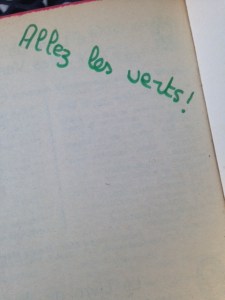
I used to add my first name in each of my books.

Apparently, while in high school I was a supporter of the French soccer team from Saint-Etienne, nicknamed Les Verts or The Greens, due to its home colors. Temporary fad, due to an irresistible player.

Thank you again for your support and positive energy.